 Save
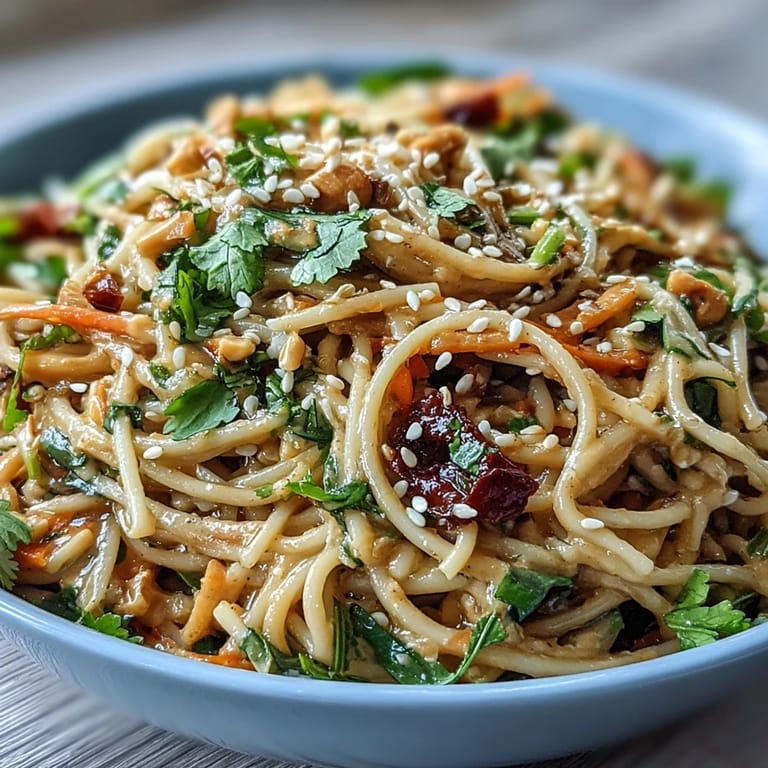
Save There's something about the sizzle of noodles hitting cold water that still makes me smile—it happened on a sweltering afternoon when I needed lunch but couldn't face anything heavy. I threw together whatever vegetables were lurking in my crisper drawer and whisked up a peanut sauce on instinct, not really knowing what I was doing. That first bite was electric: cool, crunchy, creamy all at once. Now this salad shows up whenever the weather turns warm, or when I need to feed a crowd something that feels both comforting and bright.
I'll never forget bringing this to a potluck where everyone else had brought heavy casseroles—my noodle salad practically vanished, and someone asked for the recipe while their mouth was still full. That's when I realized this wasn't just lunch food; it was the kind of dish that makes people feel seen and cared for, even when it's effortlessly simple.
Ingredients
- Dried soba noodles or spaghetti (250 g): Soba brings an earthy nuttiness, but regular spaghetti works beautifully too—the real magic happens when you rinse them thoroughly with cold water so they stay loose and individual rather than clumping together.
- Sesame oil (1 tsp): This small amount tossed with the warm noodles acts like a silky shield, keeping them from sticking and adding a toasted richness that lingers on your palate.
- Red cabbage (1 cup shredded): Its crunch stays crisp even after sitting in dressing, and the deep burgundy color makes the whole bowl look alive.
- Carrots (1 cup julienned): Raw carrots add sweetness and satisfying bite; they're also forgiving to cut, so this is a great dish if you're still building your knife skills.
- Bell pepper (1, thinly sliced): Choose red or yellow for sweetness that balances the savory peanut sauce beautifully.
- Spring onions (2, thinly sliced): They add a gentle onion bite without overwhelming the delicate vegetables, and slicing them thin means they distribute flavor throughout every forkful.
- Cucumber (1/2 cup julienned): Adds a refreshing coolness that makes this salad feel summery and hydrating, almost thirst-quenching on its own.
- Fresh cilantro (1/4 cup): It brightens everything with its herbal sharpness—don't skip it or use dried, as the fresh herb is what brings the whole dish into focus.
- Roasted peanuts (1/4 cup roughly chopped): Buy them already roasted and salted if you can; they're cheaper than making your own and honestly just as good.
- Creamy peanut butter (1/4 cup): Use the kind with just peanuts and salt, nothing hydrogenated—when you whisk it into warm water, it becomes glossy and pourable rather than gluey.
- Soy sauce (2 tbsp): This is your umami backbone; tamari works for gluten-free eating and honestly tastes a shade cleaner to my palate.
- Rice vinegar (1 tbsp): It's milder than distilled vinegar and doesn't overpower—just adds a gentle tang that makes you crave another bite.
- Honey or maple syrup (1 tbsp): A touch of sweetness rounds out the sharp edges and makes the sauce feel balanced rather than one-note.
- Toasted sesame oil (1 tbsp): This is different from the first drizzle—it goes into the dressing and adds a deep, nutty complexity that tastes almost smoky.
- Warm water (1–2 tbsp): Added gradually until your dressing reaches the consistency of heavy cream—too thick and it won't coat the noodles; too thin and it pools at the bottom.
- Fresh ginger (1 tsp grated): Grate it right before using; there's no substitute for that sharp, clean bite of fresh ginger, and jarred just doesn't compare.
- Garlic clove (1 small, minced): One clove is plenty—more and it becomes aggressive rather than aromatic.
- Sriracha or chili sauce (1 tsp, optional): If you like heat, add it to the dressing; if you're serving people with varying spice preferences, let them drizzle it on their own portion instead.
- Toasted sesame seeds (1 tbsp for garnish): Toast them in a dry pan for 30 seconds to wake up their flavor—they go from bland to deep and almost buttery.
Tired of Takeout? 🥡
Get 10 meals you can make faster than delivery arrives. Seriously.
One email. No spam. Unsubscribe anytime.
Instructions
- Boil your noodles until they're tender:
- Follow the package timing—whether it's 8 minutes for soba or 9 for spaghetti—then drain them through a colander and run cold water over them until they feel cool to the touch. Toss immediately with that teaspoon of sesame oil while they're still slightly warm, so the oil coats every strand and keeps them from bonding into one solid mass.
- Whisk the dressing into silky submission:
- Combine your peanut butter, soy sauce, rice vinegar, honey, toasted sesame oil, ginger, and garlic in a medium bowl and whisk until smooth—start with just a tablespoon of warm water and add more as you go, because the dressing should look like thick cream, not pancake batter. Taste it and adjust: if it tastes too funky or aggressive, add another teaspoon of honey; if it's too rich, a dash more vinegar brings it into balance.
- Build your bowl with intention:
- In your largest bowl, toss together the cooled noodles, cabbage, carrots, bell pepper, spring onions, cucumber, and fresh cilantro—this is where the salad comes alive because you're creating texture contrast with every toss. Get your hands in there if you need to; sometimes mixing with tongs leaves pockets of unmixed vegetables.
- Bring everything together with the dressing:
- Pour the peanut dressing over top and toss until every noodle strand and vegetable scrap glistens with it—this takes longer than you'd think, so keep tossing for a full minute or until nothing looks dry. You'll notice the dressing redistributing itself as you mix, clinging to the noodles and soaking into the vegetables' fibrous edges.
- Finish with intention and restraint:
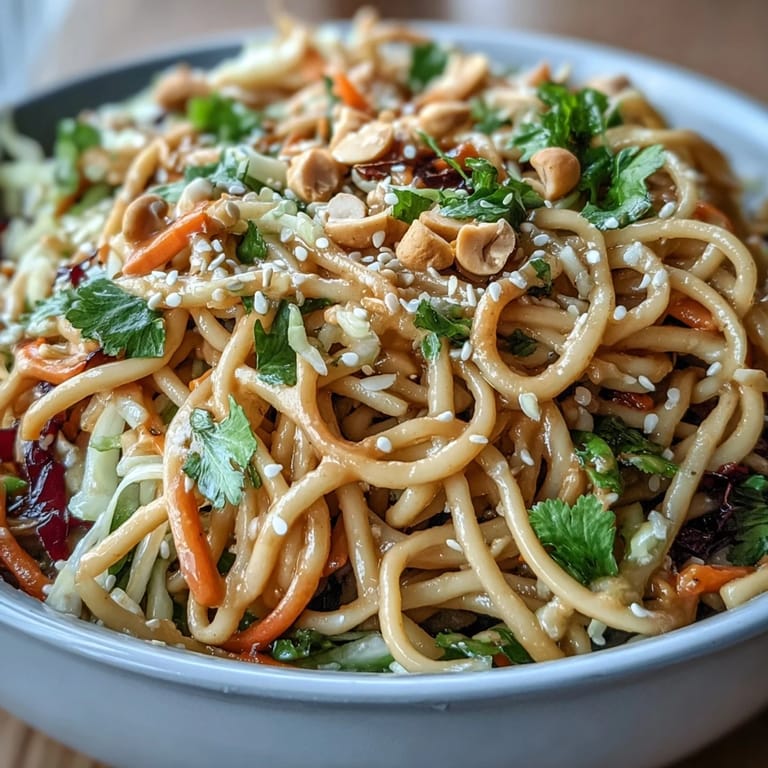
- Transfer to a platter or divide into bowls, then scatter toasted sesame seeds, extra cilantro, and chopped peanuts on top—add these just before serving or they'll lose their crunch. If you're serving later, keep the garnishes separate and add them when you plate, otherwise they'll get soggy and sad within 20 minutes.
 Save
Save My partner once ate this straight from the bowl standing up at the kitchen counter instead of sitting down at the table, and I took it as the highest compliment. It was messy and enthusiastic and genuine—exactly what food should inspire.
Why This Salad Works Every Time
The beauty of this dish lives in its flexibility and restraint; nothing fights with anything else, and the peanut dressing acts as a gentle mediator rather than a dominating force. You could swap the bell pepper for snap peas, add shredded beets for earthiness, or throw in some thinly sliced radishes for peppery bite—the structure stays solid no matter what. That's why I keep making it: it works whether you're cooking for yourself alone or feeding a table full of people with different preferences.
Making It Your Own
Adding protein transforms this from a side dish into a full meal: grilled chicken strips add substance without heaviness, crispy tofu cubes bring satisfying texture, and chilled shrimp turn it into something elegant enough for company. Even a handful of nuts—cashews or almonds work beautifully—can shift the whole vibe if you want more richness. The dressing stays balanced through all of it because peanut sauce is remarkably forgiving that way.
Storing and Serving Wisdom
This salad tastes even better the next day once flavors have time to mingle and settle, but there's an art to keeping it fresh. The vegetables stay crisp, the dressing deepens, and everything feels cohesive rather than assembled—just keep the sesame seeds and extra peanuts on the side until you're ready to eat so they maintain their crunch.
- Store in an airtight container for up to two days, and let it sit at room temperature for 15 minutes before eating if it's been chilled, as cold suppresses all the flavors.
- If the dressing looks too thick after sitting overnight, whisk in another teaspoon of warm water to loosen it back to glossy perfection.
- Double or triple the batch without hesitation—it feeds a crowd and requires almost no extra effort compared to cooking for four.
 Save
Save This is the kind of recipe that doesn't demand perfection—it rewards confidence and spontaneity instead. Make it once and you'll understand why it keeps showing up in your kitchen.
Recipe FAQs
- → What type of noodles work best for this salad?
Dried soba noodles or spaghetti work well, offering a tender bite and good flavor absorption. For gluten-free options, rice noodles can be substituted.
- → Can this dish be made vegan?
Yes, substitute honey with maple syrup and use tamari instead of regular soy sauce for a fully vegan version.
- → How can I add protein to this salad?
Grilled chicken, tofu, or shrimp are great additions to increase protein content while complementing the fresh flavors.
- → What allergens are present in this preparation?
This dish contains peanuts, soy, and may contain gluten unless gluten-free noodles and tamari are used. Sesame is also present.
- → How should the salad be stored for best freshness?
Store in the refrigerator for up to two days. For best texture, add roasted peanuts just before serving to maintain crunch.
- → What is the purpose of sesame oil in the salad?
Sesame oil is used to coat the noodles to prevent sticking and to enhance the nutty flavor profile of the dish.