 Save
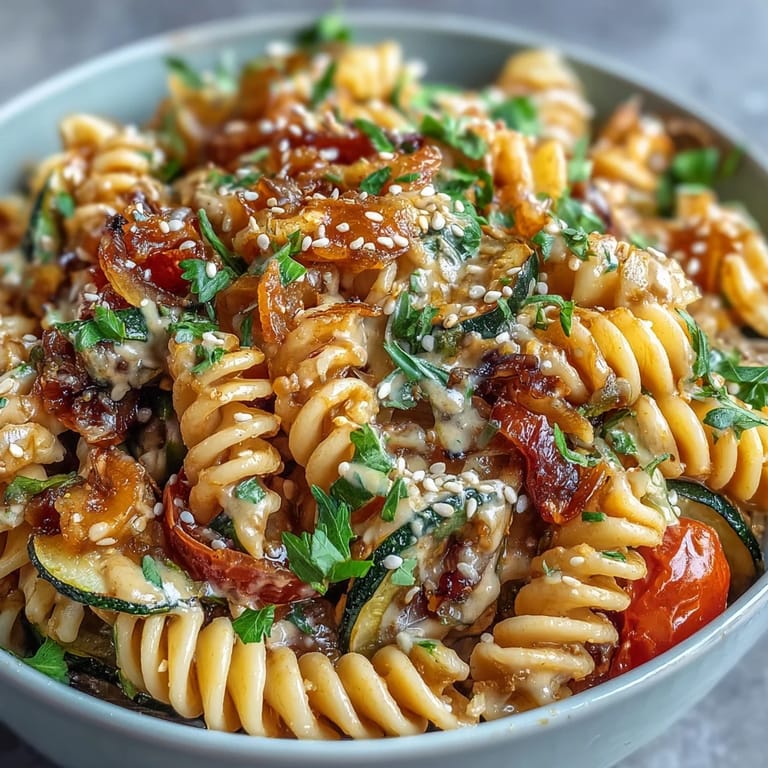
Save There's something quietly satisfying about discovering a pasta that actually fills you up instead of leaving you hungry an hour later. The first time I grabbed a box of chickpea pasta at the market, I was skeptical—would it taste like cardboard? But tossed with roasted vegetables and a silky tahini sauce, it became the kind of bowl I find myself craving on days when I need real nourishment. It's the pasta equivalent of a warm hug from someone who actually listens.
I made this for my roommate on a Tuesday evening when she was stressed about work, and watching her face change after the first bite was worth every vegetable I chopped. She asked for the recipe before she'd finished eating, which tells you everything you need to know.
Ingredients
- Chickpea pasta (340 g / 12 oz): This is the backbone of the bowl—it's higher in protein and fiber than regular pasta, so it actually sustains you.
- Zucchini (1 medium, diced): It softens beautifully when roasted and absorbs the flavors around it.
- Red bell pepper (1, chopped): Adds sweetness and a hint of char that makes the whole bowl taste more refined than it is.
- Red onion (1 small, sliced): It becomes sweet and jammy when roasted, nothing harsh about it.
- Cherry tomatoes (1 cup, halved): These concentrate their flavor in the heat and burst slightly, creating little pockets of tang.
- Olive oil (2 tablespoons): Use something you actually like—it's the fat that carries all the seasoning and makes everything taste alive.
- Dried oregano (1 teaspoon) and smoked paprika (1/2 teaspoon): The oregano whispers Mediterranean vibes while the paprika adds a whisper of smoke.
- Tahini (60 g / 1/4 cup): This is the soul of the sauce—buy the kind without additives, and don't skimp on quality.
- Lemon juice (2 tablespoons): It brightens everything and keeps the sauce from feeling heavy.
- Maple syrup or agave (1 tablespoon): A small amount balances the tahini's earthiness with subtle sweetness.
- Warm water (2 tablespoons, plus more): The temperature matters—it helps the tahini relax into creaminess rather than staying stubborn and thick.
- Garlic (1 clove, minced): Raw garlic is peppery and assertive, so don't double this unless you want your breath announcing your dinner choices.
- Fresh parsley and sesame seeds: The parsley adds brightness and a fresh snap, while toasted sesame seeds give texture and nuttiness.
Tired of Takeout? 🥡
Get 10 meals you can make faster than delivery arrives. Seriously.
One email. No spam. Unsubscribe anytime.
Instructions
- Set your oven and prep:
- Get your oven to 220°C (425°F) and line a baking sheet with parchment paper—this prevents sticking and makes cleanup feel like something happened to someone else. Take your time here because rushing the setup always costs you later.
- Toss the vegetables:
- In a large bowl, combine your diced zucchini, bell pepper, red onion, and cherry tomatoes with olive oil, oregano, smoked paprika, salt, and pepper. Make sure everything gets coated evenly—the oil is what creates that caramelized edge, so don't be shy. Spread it all on the baking sheet in a single layer, leaving a little space between pieces so they roast instead of steam.
- Let them roast:
- Pop the vegetables into the oven for 20 to 25 minutes, giving them a stir halfway through. You'll know they're ready when the edges start to brown and the kitchen smells like summer.
- Cook the pasta:
- While the vegetables are doing their thing, bring a large pot of salted water to a boil and cook your chickpea pasta according to package directions. Drain it well but don't rinse—the starch helps the sauce cling to the noodles.
- Make the tahini sauce magic:
- In a small bowl, whisk together tahini, lemon juice, maple syrup, warm water, minced garlic, and a pinch of salt. The warmth of the water is what coaxes tahini from thick and stubborn into something pourable and silky. If it's still too thick, add water one tablespoon at a time until you get the consistency of heavy cream.
- Bring it all together:
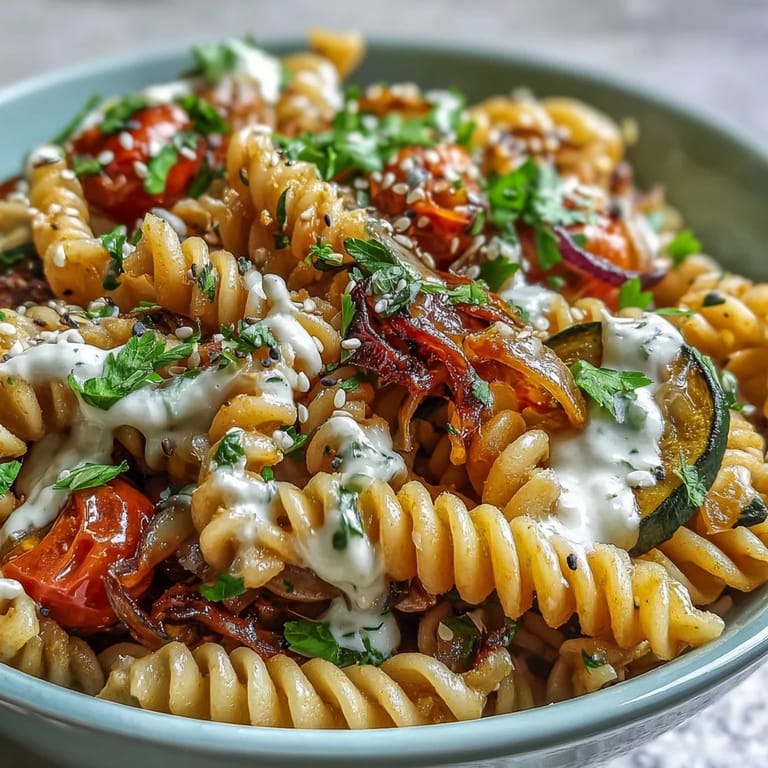
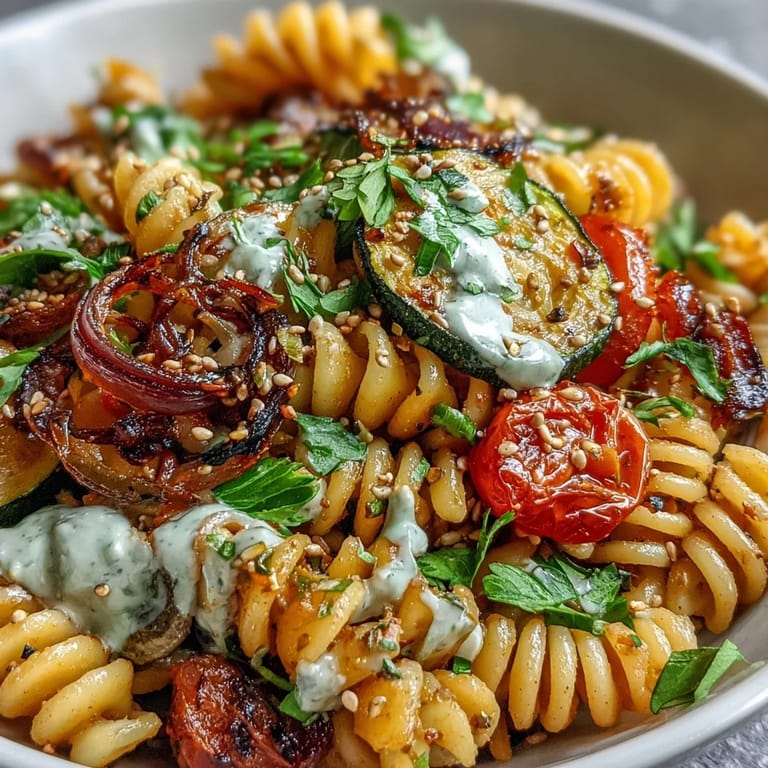
- Combine your cooked pasta and roasted vegetables in a large mixing bowl, then drizzle the tahini sauce over everything. Toss gently so the sauce coats each strand of pasta without breaking the vegetables apart.
- Serve with intention:
- Divide the bowl between serving dishes and finish with a scatter of fresh parsley and toasted sesame seeds. This tastes good warm or at room temperature, which makes it perfect for eating straight away or boxing up for lunch tomorrow.
 Save
Save My coworker brought this for lunch one day and the whole office smelled incredible—people kept asking what she was eating, and by the next week three of us were batch-cooking it on Sundays. Food that makes other people curious is food worth knowing how to make.
Why Chickpea Pasta Changes Everything
The first time I tried chickpea pasta, I was expecting something dense and strange, but it's actually lighter than whole wheat and somehow more interesting than regular pasta. It has this subtle nuttiness that plays beautifully with tahini, and the protein content means a single bowl is actually a complete meal. Once you go chickpea, regular pasta starts feeling incomplete.
The Tahini Sauce Principle
A good tahini sauce is about balance—earthy tahini needs brightness from lemon, a touch of sweetness to round it out, and just enough salt to make everything sing. I learned this after making a batch that was so intense it could strip varnish, and now I taste as I go. The sauce shouldn't overpower the vegetables; it should make them taste like the best versions of themselves.
Make It Your Own
This bowl is a template waiting for your creativity, so don't feel locked into these exact vegetables. Whatever's in season or looking good at the market works here—eggplant, broccoli, carrots, or mushrooms all become delicious when roasted. You can also bulk it up by stirring in cooked chickpeas or adding crispy tofu cubes for extra protein and texture.
- The sesame seeds taste noticeably better if you toast them yourself in a dry pan for a minute or two.
- Leftovers keep for three days in the fridge, and this actually tastes even better on day two when the flavors have gotten to know each other.
- Pair it with something crisp—a cold glass of white wine or even just sparkling water with lemon makes everything taste more like an occasion.
 Save
Save This bowl became my answer to the question I used to ask at 6 p.m.—what can I actually make that feels nourishing and not like punishment? It's the kind of food that takes care of you, and that matters more than any fancy technique.
Recipe FAQs
- → Is chickpea pasta gluten-free?
Most chickpea pasta brands are naturally gluten-free since they're made solely from chickpea flour. However, always check the packaging to confirm, as some facilities process wheat products and cross-contamination is possible.
- → Can I make the tahini sauce ahead of time?
Absolutely. The tahini sauce stores well in the refrigerator for up to 5 days in an airtight container. It may thicken when chilled—simply whisk in a teaspoon of warm water to restore the creamy consistency before serving.
- → What vegetables work best for roasting in this bowl?
Zucchini, bell peppers, red onion, and cherry tomatoes are excellent choices. You can also substitute eggplant, broccoli, cauliflower, sweet potato, or carrots depending on the season. Just ensure uniform cutting for even roasting.
- → How can I add more protein to this dish?
This bowl already provides 17g of protein per serving. To boost it further, add cooked chickpeas, grilled tofu cubes, hemp seeds, or a sprinkle of nutritional yeast. These additions complement the existing flavors without overpowering the dish.
- → Can I serve this pasta bowl cold?
Yes, this dish tastes delicious warm or at room temperature, making it ideal for packed lunches and picnics. The flavors actually develop more depth after sitting for a few hours. Just add the garnish right before serving for the freshest presentation.
- → What can I substitute for tahini?
If you have a sesame allergy, try almond butter, cashew butter, or sunflower seed butter as alternatives. Each provides a creamy texture with a slightly different flavor profile. You may need to adjust the lemon and sweetener to taste.