 Save
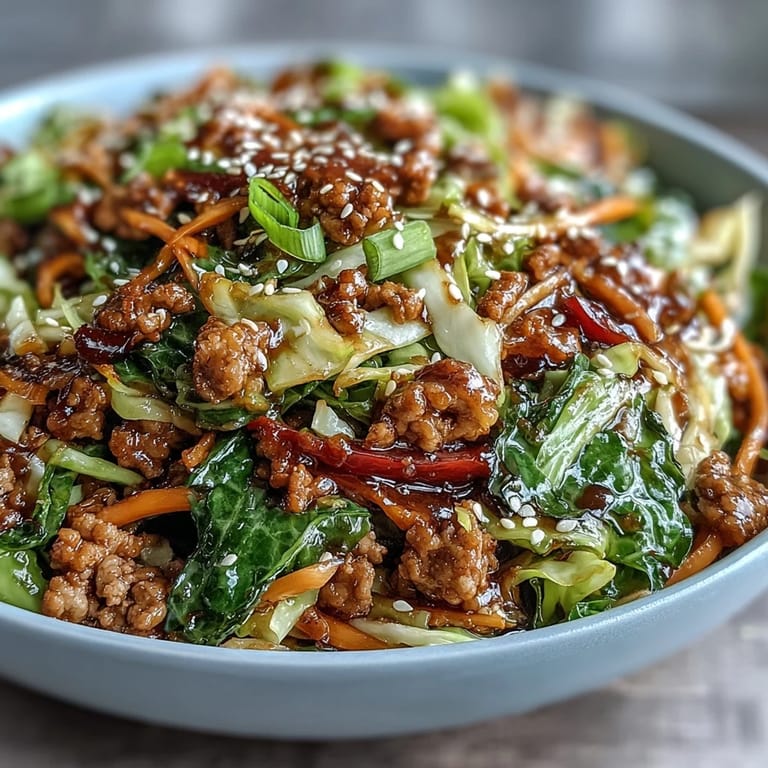
Save There was a Thursday evening when I'd committed to eating better but absolutely refused to give up flavor, and that's when this stir-fry became my kitchen salvation. My partner wandered in as I was browning the turkey, drawn by the smell of sesame oil hitting the hot pan, and asked if dinner would actually taste good or if I was just pushing vegetables around. By the time those bright cabbage ribbons hit the wok and started crackling, they were already reaching for a bowl. It turns out that feeding yourself well doesn't require complicated techniques or boring meals—just good timing, sharp heat, and ingredients that actually work together.
I made this for my sister during one of those weeks where she was training for something and desperately needed meals that wouldn't leave her feeling sluggish. She ate it straight from the wok standing at the counter, barely pausing between bites, and then asked if I could make it again the next day. Watching someone genuinely enjoy food they know is nourishing them is its own kind of satisfaction—there's no guilt mixed in, just pure appreciation.
Ingredients
- Ground turkey (500 g): Use the leanest option you can find because it browns better and won't release excess oil that dilutes your sauce; I learned this after a few watery attempts.
- Green cabbage (1 medium head, shredded): This is your volume trick—it wilts dramatically but stays textured enough to feel substantial, and it's nearly calorie-free so you can eat as much as you want.
- Carrots (2 large, julienned): The julienne cut matters because thin carrots cook through in the time the cabbage softens, preventing that undercooked-vegetable crunch that throws everything off.
- Red bell pepper (1, thinly sliced): Slice lengthwise rather than in rings so the pieces stay intact during the stir-fry and distribute evenly throughout each bite.
- Green onions (4, sliced): Reserve half for the end because the raw bite at the finish brightens the entire dish in a way cooked onions simply can't.
- Garlic and ginger (3 cloves and 1 tbsp): These two wake up the entire pan within seconds, so add them together and watch closely so they bloom without burning—that line between aromatic and bitter happens fast.
- Soy sauce (3 tbsp low-sodium): Low-sodium matters here because you control the salt level; full-sodium will overshadow the vegetables and make everything taste one-dimensional.
- Rice vinegar (1 tbsp): This adds brightness that keeps the dish from tasting flat or greasy, and it's essential even though you barely notice it's there.
- Sesame oil (1 tbsp): This is your fat base and flavor anchor—use it to start the pan, not to drown the food, or everything becomes slick instead of glossy.
- Chili flakes (1 tsp, optional): Add these if you want heat that builds rather than attacks, and always taste as you go because chili tolerance varies wildly.
- Sesame seeds (1 tbsp toasted): Toast them yourself in a dry pan for thirty seconds if you can; store-bought toasted seeds are fine but fresh-toasted adds a nuttiness that pulls the whole thing together.
Tired of Takeout? 🥡
Get 10 meals you can make faster than delivery arrives. Seriously.
One email. No spam. Unsubscribe anytime.
Instructions
- Get your pan screaming hot:
- Use a large non-stick skillet or wok over medium-high heat and let it warm for a full minute before adding oil—you want that sesame oil to shimmer and move immediately when it hits the surface. If it just sits there, your pan isn't ready yet.
- Brown the turkey until it's actually brown:
- Add the ground turkey and resist the urge to stir constantly; let it sit for two minutes so it develops color, then break it up with your spatula and continue cooking for about five minutes total until no pink remains. You're building flavor here, not just cooking meat.
- Wake everything up with aromatics:
- Toss in the garlic and ginger and stir constantly for one minute—this is when your kitchen will smell incredible, and that's your signal to move quickly to the next step before they start to brown.
- Add the vegetables and keep the momentum going:
- Dump in the cabbage, carrots, and bell pepper all at once and stir-fry vigorously for five to seven minutes until the cabbage has wilted but still has some resistance when you bite it. The pan should sound alive—you should hear things sizzling and moving.
- Bring everything together with sauce:
- Pour in the soy sauce, rice vinegar, and chili flakes if using, and toss everything until every piece of vegetable is coated and the liquid has mostly evaporated. This takes about one minute and ties all the flavors together.
- Taste and adjust before serving:
- Season with salt and pepper, keeping in mind that the soy sauce already has salt, so go slowly. Remove from heat immediately so nothing overcooks in residual heat.
- Finish with the bright stuff:
- Stir in the reserved green onions and top with toasted sesame seeds and a sprinkle of extra green onions for color and fresh bite. Serve while it's hot because temperature matters for the texture contrast.
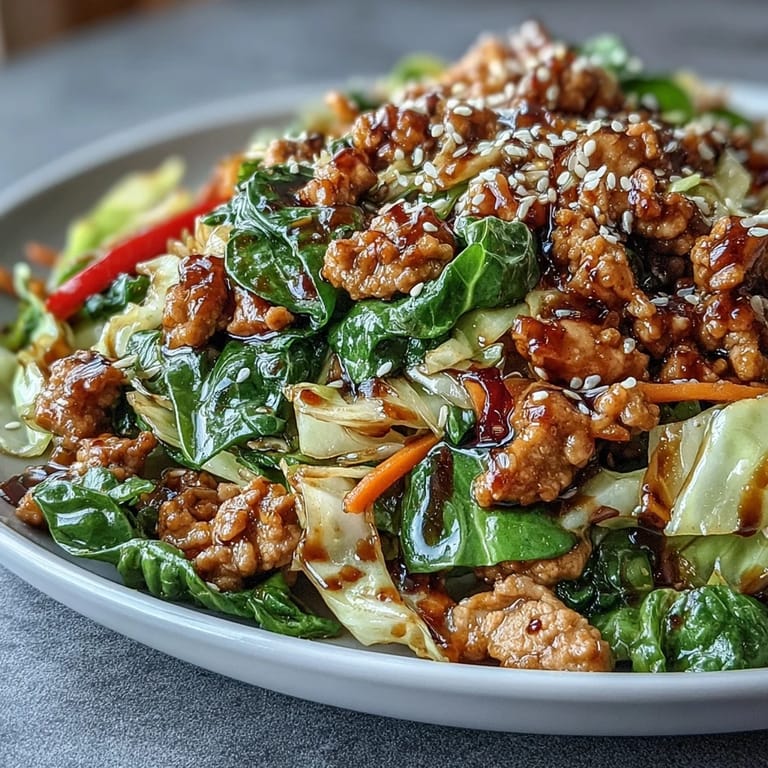 Save
Save There's a moment about halfway through cooking when the turkey is browned and the garlic-ginger aroma fills the kitchen, and you know you're about to make something that tastes expensive and complicated but absolutely isn't. That moment is when you realize that eating well and eating deliciously don't have to be at odds with each other.
The Magic of High-Volume Cooking
This dish taught me that volume matters more than I'd ever considered before. The cabbage shrinks dramatically when cooked—that entire head that looks impossibly large when shredded becomes a reasonable portion that fills your plate and stomach without leaving you feeling stuffed or sluggish. It's the kind of cooking trick that changes how you approach meals, especially if you're someone who eats with their eyes and needs to see food on the plate to feel satisfied.
Why the Cooking Method Matters
Stir-frying at high heat isn't just about speed; it's about chemistry. The vegetables soften while maintaining texture, the turkey stays tender instead of becoming grainy, and the sauce reduces and clings to everything rather than pooling at the bottom of the pan. If you slow this down or lower the heat, you end up with steamed vegetables and watery sauce—completely different dish. The high heat is what makes this work, so don't be tempted to turn it down even if things sound aggressive in the pan.
Flexibility and Storage
This recipe is forgiving in ways that matter for real life cooking. You can swap the turkey for ground chicken, ground beef, crumbled tofu, or even tempeh, and the cooking time stays roughly the same. Leftovers keep for three days in the fridge and reheat beautifully in a hot pan or microwave without becoming weird or mushy. Serve it plain, over brown rice, over cauliflower rice if you're going lower-carb, or with a side of steamed dumplings if you're feeling less austere about the evening.
- Make extra and freeze portions if you're the type to forget about leftovers and suddenly need an emergency dinner.
- Batch the prep on a Sunday and you can make this on any weeknight without thinking, which removes the decision-making from healthy eating.
- Trust that it tastes better than it sounds, and your body will thank you for eating something this genuinely nourishing.
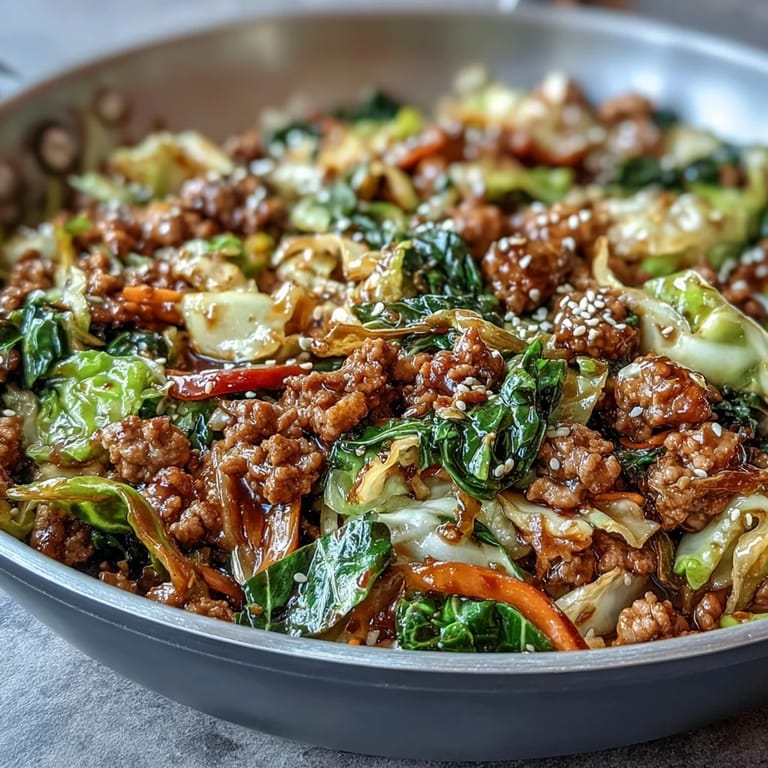 Save
Save This stir-fry sits somewhere between comfort and discipline, the kind of meal that proves you don't have to choose between eating well and eating something you actually want. Make it tonight and you'll understand why it became such a fixture in my kitchen.
Recipe FAQs
- → What cooking oil is best for stir-frying this dish?
Sesame oil enhances the flavor and is perfect for medium-high heat stir-frying, adding a nutty aroma to the dish.
- → Can the ground turkey be substituted?
Yes, ground chicken, tofu, or tempeh can be used as alternatives for different textures and flavors.
- → How can I make this dish gluten-free?
Replace regular soy sauce with tamari or coconut aminos to ensure a gluten-free version.
- → What is a good side to serve with this stir-fry?
Steamed brown rice or cauliflower rice complements the dish well, providing added volume and texture.
- → How long can leftovers be stored safely?
Store leftovers in the refrigerator for up to 3 days, keeping flavors fresh and safe to eat.