 Save
Save I discovered beignets on a gray morning in New Orleans, stepping into a café where the air was thick with powdered sugar and the sound of frying oil. The woman behind the counter handed me a warm square of fried dough without asking what I wanted, as if everyone who walked through that door needed exactly this. I bit into it and felt the pillowy inside give way, sugar coating my fingers and settling on my jacket. Something about that moment—the chaos of a busy kitchen, the comfort of something so simple, the inevitable mess—made me want to figure out how to recreate it at home. Now whenever I make beignets, I'm chasing that exact feeling of warmth and indulgence.
My sister made these for a brunch party once, dusting them fresh while guests arrived, and I watched people's faces change the moment they took that first bite. Someone's nephew got powdered sugar all over his face and nobody cared, everyone was too busy reaching for another one. That's when I realized beignets aren't about being fancy—they're about creating a moment where people slow down and just enjoy something warm together.
Ingredients
- All-purpose flour (3 1/2 cups): This is your foundation, and the amount matters—I learned the hard way that eyeballing it leads to dense beignets instead of fluffy ones, so measure it by spooning flour into your cup and leveling off.
- Warm water (1 cup): The temperature is crucial here; too hot and you'll kill the yeast, too cool and nothing happens, so if you don't have a thermometer, aim for water that feels warm but not hot to your pinky finger.
- Active dry yeast (2 1/4 tsp): Check your yeast's expiration date before you start, because dead yeast is the quickest path to flat disappointment.
- Whole milk and egg: These bring tenderness and richness to the dough, making beignets pillowy rather than dense and chewy.
- Granulated sugar and salt: A quarter cup of sugar sweetens the dough itself, while salt enhances flavor—don't skip either one.
- Unsalted butter (2 tbsp, melted): The melted butter adds flavor and a silky texture that makes the dough smooth and elastic.
- Vegetable oil: You'll need enough to reach 2–3 inches in your pot so beignets can puff freely without crowding.
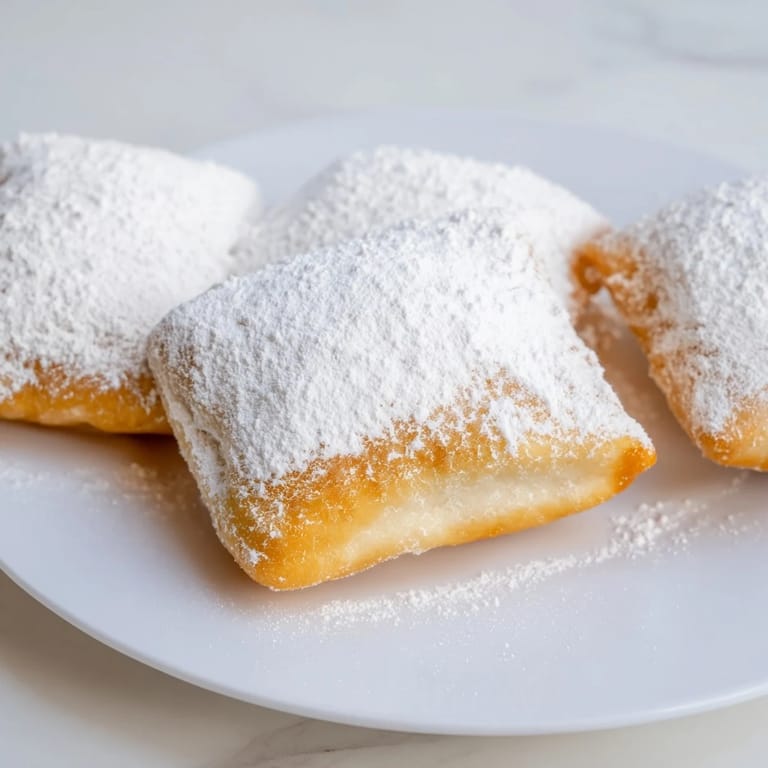
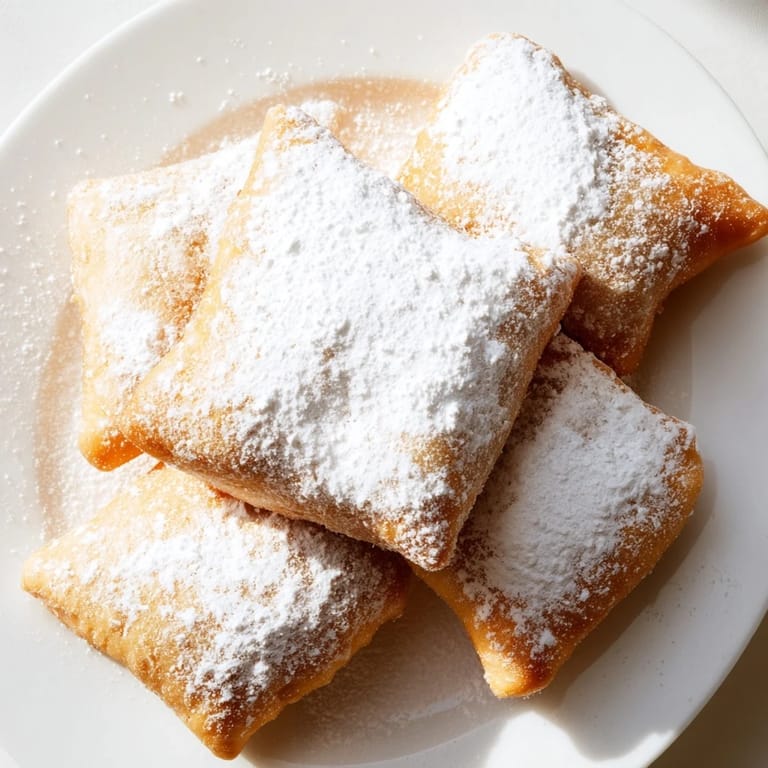
- Powdered sugar (1 1/2 cups): This isn't optional and it's not just a garnish—the generous dusting is what makes a beignet a beignet, so buy extra because you'll want seconds.
Tired of Takeout? 🥡
Get 10 meals you can make faster than delivery arrives. Seriously.
One email. No spam. Unsubscribe anytime.
Instructions
- Wake up your yeast:
- Combine warm water, a tiny pinch of sugar, and yeast in a small bowl and let it sit for five minutes until it looks foamy and smells alive. This is your proof that the yeast is ready to work; if it doesn't foam, your yeast is dead and you'll need to start over.
- Build your dough base:
- Mix flour, the remaining sugar, and salt in a large bowl, creating a well in the center. This dry mixture is your canvas for everything that makes beignets tender and flavorful.
- Bring it together:
- Pour the foamy yeast mixture into the well along with the milk, egg, and melted butter, then stir until a shaggy dough forms. Don't overthink it at this stage—you're just combining everything into a rough, wet mass.
- Knead until smooth:
- Knead by hand or with a dough hook for five to seven minutes until the dough becomes smooth, elastic, and slightly sticky rather than stiff. You'll know you're done when you can stretch a small piece without it tearing immediately.
- Let it rise:
- Oil a bowl lightly, place your dough in it, cover with plastic wrap or a clean towel, and set it somewhere warm (an oven with just the light on works perfectly) for one to one and a half hours until it doubles in size. This rise is where the magic happens—the yeast creates tiny air pockets that will make your beignets fluffy.
- Shape your squares:
- Punch down the risen dough to release the gas, then transfer it to a floured surface and roll it out to about a quarter inch thick, like you're making thin pizza dough. Cut it into two-inch squares using a sharp knife or pizza cutter; they don't have to be perfect.
- Heat your oil:
- In a deep fryer or large heavy pot, heat vegetable oil to exactly 350°F (175°C)—use a thermometer if you have one, because guessing leads to either underdone dough or burnt exteriors. If you don't have a thermometer, drop in a small piece of dough; it should sizzle immediately and float to the surface within a few seconds.
- Fry in batches:
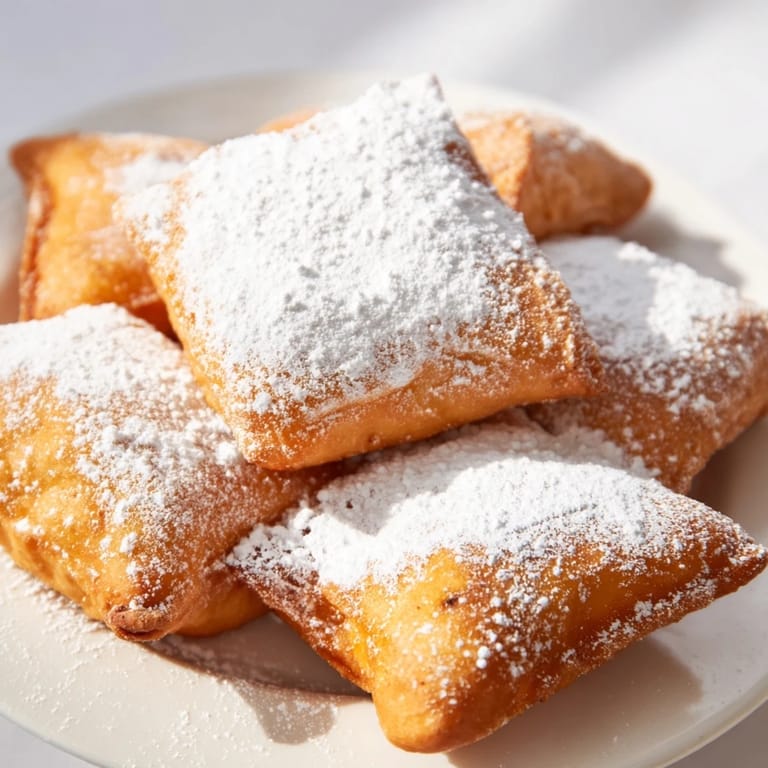
- Working in small batches so you don't overcrowd the oil, slide your dough squares in and let them fry for about one to two minutes per side until they're puffed and golden brown. You'll hear the sizzle change pitch as they puff, and you want them to float and bob around like they're having their own little party.
- Drain and dust:
- Remove fried beignets with a slotted spoon and let them drain on paper towels for just a minute, then while they're still warm, dust them generously with powdered sugar—don't be shy here, that sugar coating is essential. Serve them immediately while they're warm, because that's when they're at their absolute best.
 Save
Save My neighbor came over and we made these together on a Saturday afternoon, and she watched her nine-year-old daughter get completely covered in powdered sugar, white from fingertips to elbows, and instead of being frustrated she just laughed. That's when I understood that beignets succeed not because they're technically perfect, but because they bring people together around something warm and a little bit messy and entirely worth the cleanup.
The Science Behind the Puff
Beignets are essentially a yeast dough that gets fried instead of baked, and the yeast is what creates those magical air pockets that make them so light. When you fry the dough, the liquid inside turns to steam, which inflates those pockets even more, and if your oil is the right temperature, the outside sets into a golden shell while the inside stays tender. This is why temperature matters so much—it's the difference between a pillowy cloud and a greasy brick.
Timing and Make-Ahead Options
If you want to spread the work across two days, you can make the dough in the evening, let it rise overnight in the fridge, then shape and fry it fresh in the morning—the slow, cold rise actually develops more flavor. You can also fry the beignets ahead of time and reheat them in a 350°F oven for a few minutes until they're warm again, though they'll never be quite as magical as fresh ones. For the best experience, plan your timing so you're frying them within an hour of when you want to eat them.
Serving and Variations
In New Orleans, beignets are traditionally served with café au lait, a strong coffee diluted with hot milk, which somehow makes the whole thing taste better than it should. If you want to play with flavor, add a quarter teaspoon of vanilla extract or a pinch of nutmeg to the dough, or even a whisper of cinnamon, but respect the original enough to try it plain first. These are simple enough to let the quality of your ingredients shine through.
- If you have leftover powdered sugar (you probably won't), resist the urge to reduce it next time—people expect to leave covered in white.
- Beignets can be frozen after frying and reheated, so make a batch and stash some for when friends unexpectedly visit.
- Don't serve them cold; warm beignets are a completely different experience from room-temperature ones.
 Save
Save There's something about making beignets that transforms an ordinary kitchen into something magical—the smell of frying dough, the anticipation of that first warm bite, the inevitable powdered sugar explosion that makes everyone smile. Once you master this recipe, you'll understand why people travel to New Orleans just for these.
Recipe FAQs
- → What makes the dough fluffy?
The combination of active dry yeast and a proper rising period allows the dough to develop air bubbles, resulting in a light, fluffy texture.
- → What oil temperature is best for frying?
Maintaining the oil at 350°F (175°C) ensures the dough puffs up quickly and cooks evenly without absorbing excess oil.
- → How can I keep the fried squares warm before serving?
Place them on paper towels to drain and keep them warm in a low oven set to 350°F (175°C) for a few minutes until serving.
- → Can I add flavors to the dough?
Yes, adding a touch of vanilla extract or a pinch of nutmeg enhances the dough's aroma and adds subtle flavor notes.
- → What is the best way to cut the dough?
Use a sharp knife or pizza cutter to cut the rolled dough into uniform 2-inch squares for even frying.