 Save
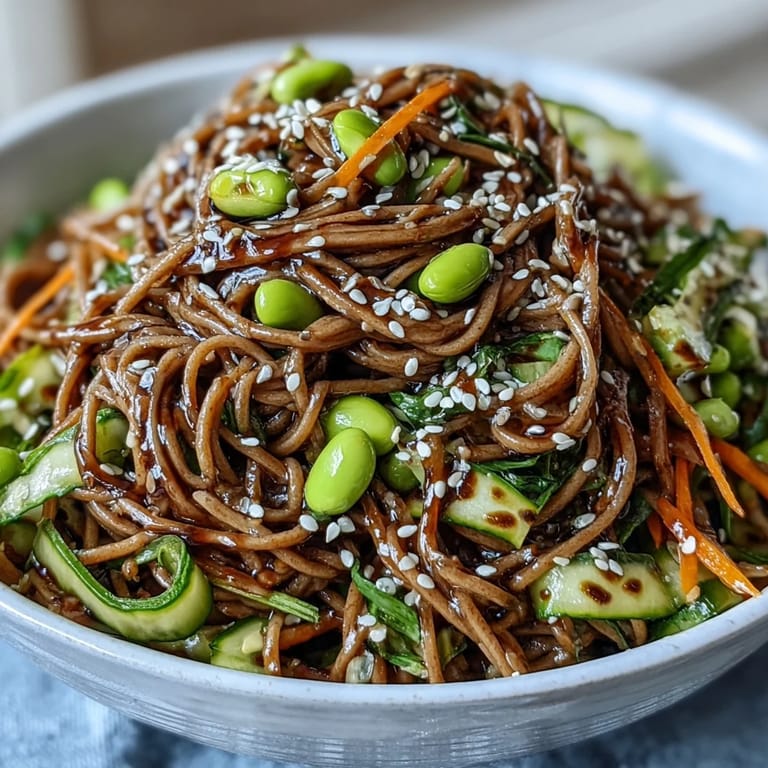
Save I discovered soba noodles by accident at a farmers market on a sweltering summer afternoon, standing in line behind someone who raved about how they stayed perfectly chewy even when chilled. That conversation stuck with me through the heat, and I went home determined to figure out what made them special. The first bowl I assembled was humble—just noodles, cucumber, and a basic sauce—but there was something about the nutty buckwheat flavor and the satisfying chew that made me keep coming back. Now it's my go-to when I want something that feels both nourishing and effortless, especially on days when the kitchen feels too warm to care about fussing.
I made this for my neighbor one afternoon when she mentioned feeling stuck in a cooking rut, and watching her face light up when she tasted it—that perfect balance of savory, tangy, and nutty—reminded me why simple food done thoughtfully matters. She's been making it ever since, and now she leaves jars of the dressing in my fridge because she knows I can't stop myself from sneaking spoonfuls.
Ingredients
- Dried soba noodles (250 g): These are made from buckwheat flour, giving them an earthy flavor and satisfying texture that won't turn mushy even when cold, which is exactly what you want here.
- Shelled edamame (1 cup): Whether fresh or frozen, these little green soybeans add protein and a buttery bite that makes the bowl feel substantial without heaviness.
- Cucumber and carrots: Julienning them creates thin, delicate strands that are easier to eat with noodles and let you taste their crisp sweetness in every bite.
- Scallions (2, thinly sliced): Their mild onion bite and fresh green color brighten everything, especially if you've been eating the same vegetables all week.
- Toasted sesame seeds (2 tbsp): These aren't just garnish—they add a nutty crunch and make the whole bowl feel intentional and finished.
- Cilantro or mint (1/4 cup, optional): I usually skip one or the other depending on my mood, but a handful of fresh herbs transforms the bowl from satisfying to genuinely memorable.
- Soy sauce or tamari (3 tbsp): This forms the savory backbone of the dressing; if you're gluten-sensitive, tamari is your friend and tastes just as good.
- Rice vinegar (2 tbsp): It adds brightness without the harshness of regular vinegar, letting the other flavors shine through.
- Toasted sesame oil (1 tbsp): A little goes a long way here—it's potent and worth buying good quality since you taste it directly.
- Tahini or peanut butter (1 tbsp): This creates creaminess and richness in the dressing without any cream, making it dairy-free and incredibly smooth.
- Honey or maple syrup (1 tbsp): Just enough sweetness to balance the savory and tangy elements, rounding out the flavor in a way that feels natural rather than sugary.
- Fresh ginger (1 tsp, grated): Grate it finely so it disperses throughout the dressing rather than creating little sharp bits that catch you off guard.
- Garlic (1 small clove, minced): One clove is plenty—mince it small so the flavor diffuses evenly without overpowering the delicate noodles.
Tired of Takeout? 🥡
Get 10 meals you can make faster than delivery arrives. Seriously.
One email. No spam. Unsubscribe anytime.
Instructions
- Bring water to a boil and cook the soba:
- Follow your package instructions closely since different brands can vary wildly in cooking time. The moment they're tender, drain them into a colander and run cold water over them while you stir gently with your fingers to prevent clumping—this is the step that makes or breaks your texture.
- Blanch the edamame while waiting:
- Boil them for 2 to 3 minutes until they're tender and bright green, then drain immediately and spread them on a plate so they cool quickly and stop cooking. They should be soft enough to eat easily but still hold their shape.
- Build the dressing in a small bowl:
- Whisk the soy sauce, rice vinegar, sesame oil, tahini, honey, ginger, and garlic together until smooth and creamy. Taste it before adding water—you want it to taste almost aggressively flavorful since it'll be distributed among four bowls.
- Prep vegetables with intention:
- Julienne the cucumber and carrots into thin matchsticks and slice the scallions on a bias so they look delicate and intentional. I like doing this step while the noodles cool because it gives me something to do with my hands.
- Toss the noodles with half the dressing:
- In a large bowl, combine the cooled soba with half of your dressing and mix gently but thoroughly so every strand gets coated. This prevents the bottom of the bowl from being dry and forgotten.
- Assemble each bowl with care:
- Divide the dressed noodles among four bowls, then arrange the edamame, cucumber, carrots, and scallions on top in whatever pattern appeals to you. Drizzle the remaining dressing over everything so each person gets their own taste of that creamy-savory sauce.
- Finish and serve immediately:
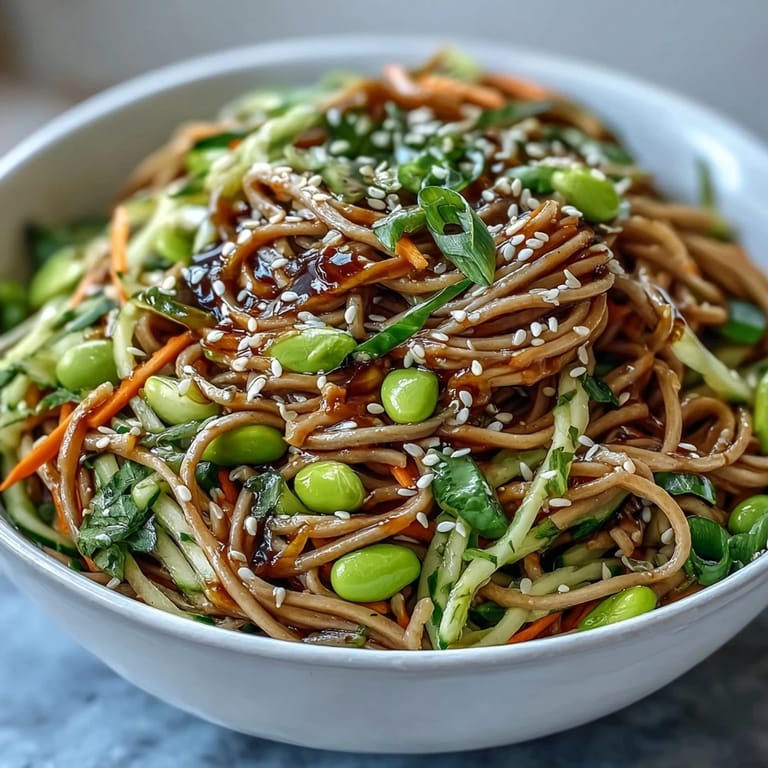
- Scatter toasted sesame seeds and your chosen fresh herbs over the top, then bring the bowls to the table while everything is still at its peak temperature contrast—warm noodles, cool vegetables, cold dressing.
 Save
Save This bowl has become my answer to every "what should we eat" conversation when someone's tired but wants something that still feels like self-care. There's something about the combination of cold noodles, crisp vegetables, and that silky dressing that makes you feel nourished rather than just fed.
Why Buckwheat Matters
True buckwheat soba has an earthiness that refined wheat noodles can't replicate—it's subtle, almost floral, and pairs beautifully with the sesame without competing for attention. The first time I tried 100% buckwheat versus a blend, I understood why Japanese cooks have been making this distinction for centuries. If you see noodles with wheat flour listed first, they'll still be delicious, but they'll taste more like regular pasta than the authentic buckwheat experience.
The Dressing Is Everything
I've learned that this sesame dressing is forgiving in almost every way except one: the balance between salty, sweet, tangy, and nutty needs to exist in harmony. Taste as you go, and don't be afraid to adjust—if it tastes too vinegary, add a touch more honey; if it feels flat, a pinch more ginger wakes it up. This dressing also keeps beautifully in the fridge for up to five days, which means you can make it once and eat it on noodles, drizzle it on roasted vegetables, or use it as a marinade for tofu.
Make It Your Own
The beauty of this bowl is that it adapts to whatever you have on hand and whatever your body is craving that day. On days when I'm protein-hungry, I'll add a soft-boiled egg or some grilled tofu right on top; other times I'll swap the cucumber for crisp bell peppers or add radish slices for extra bite. The formula stays the same but the experience changes, which is exactly why I keep coming back to it.
- Grilled tofu, a soft-boiled egg, or chickpeas turn this into a more substantial meal if you're hungry.
- Snap peas, bell peppers, radishes, or even thinly sliced cabbage work beautifully as swaps for any of the vegetables.
- Serve it immediately while the noodles are still slightly warm and the vegetables are at peak crispness for the best texture contrast.
 Save
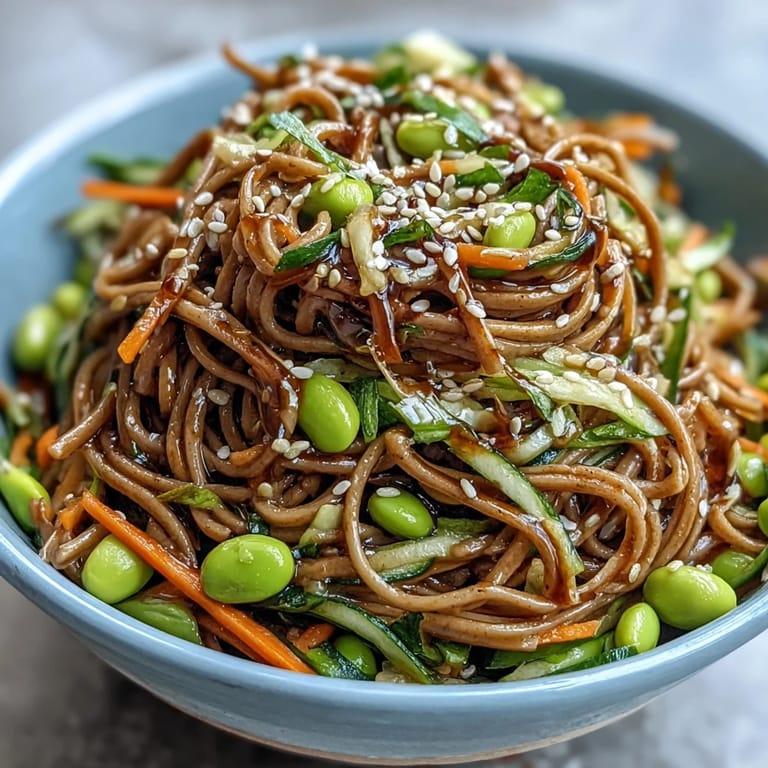
Save This soba bowl has become my proof that you don't need complicated techniques or hard-to-find ingredients to create something genuinely delicious and nourishing. Make it once, and I think you'll understand why I keep coming back to it.
Recipe FAQs
- → What do soba noodles taste like?
Soba noodles have a distinctive nutty, earthy flavor from buckwheat flour with a pleasantly chewy texture. They're lighter than wheat-based noodles and absorb flavors beautifully from dressings and sauces.
- → Can I make this bowl gluten-free?
Absolutely. Look for 100% buckwheat soba noodles and substitute tamari for the soy sauce. Many traditional soba noodles contain wheat, so always check the label to ensure they're made entirely from buckwheat flour.
- → How long does this keep in the refrigerator?
The components can be stored separately for up to 3 days. Keep the dressed noodles in an airtight container, and store vegetables and dressing separately. Add fresh garnishes like sesame seeds and herbs just before serving.
- → What vegetables work best in this dish?
Crisp vegetables that hold their texture well are ideal. Try bell peppers, snap peas, shredded cabbage, radishes, or steamed broccoli. The key is variety in color and crunch to complement the tender noodles.
- → Can I serve this warm instead of chilled?
Yes, soba noodles are delicious served warm. Simply toss the hot noodles with the dressing immediately after cooking, then top with lightly steamed vegetables rather than raw ones. The flavors meld beautifully when served warm.
- → What protein additions work well?
Grilled or baked tofu, shredded chicken, cooked shrimp, or a soft-boiled egg all pair wonderfully. Edamame already provides protein, but these additions make it more substantial as a main course.