 Save
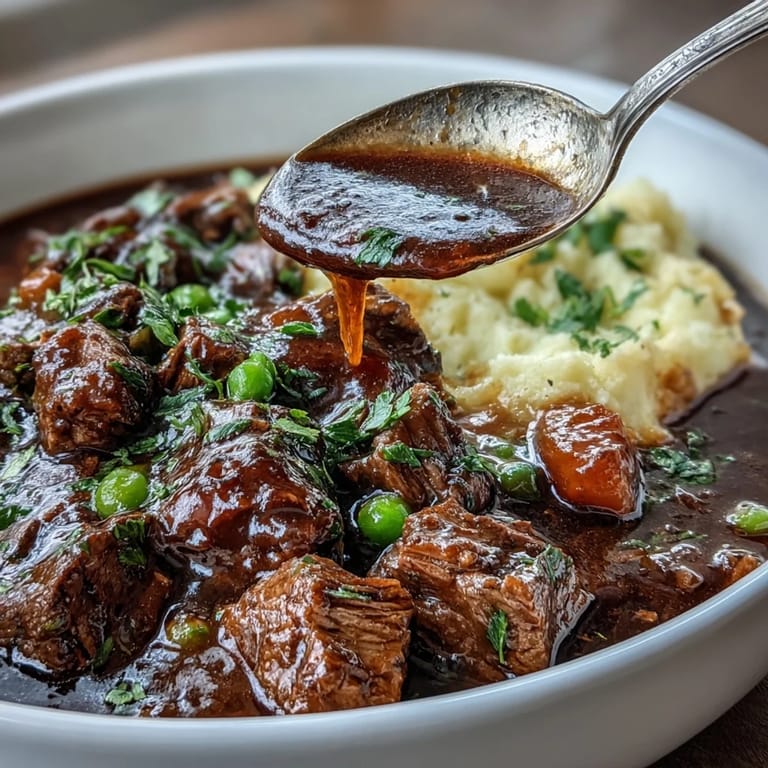
Save My sister called me one rainy Tuesday asking if I could lighten up her beloved Irish stew without losing that soul-warming comfort she craved. She'd just started paying attention to what she ate, and I realized that traditional stew with its buttery potatoes wasn't going anywhere near her kitchen anymore. So I started experimenting, swapping in cauliflower mash and lean beef, and the first time she tasted it, she went quiet for a moment—the kind of quiet that means you've gotten something right. It turns out you don't need heavy starches to feel like you're wrapped in a wool blanket on a cold evening.
I made this for my book club on a February night when everyone was tired of salads and wanted something that felt indulgent without the guilt. One friend who's usually skeptical about anything labeled 'lighter' actually asked for seconds, and then the recipe. That's when I knew I'd cracked the code—when people stop analyzing what's missing and just enjoy what's in front of them.
Ingredients
- Lean beef stew meat: Trimming the fat here doesn't dry things out because the slow cooking and braising liquid keep everything tender and juicy.
- Olive oil: Just one tablespoon is enough to get a beautiful sear on the beef, which builds all the flavor you need.
- Onion, carrots, and celery: This trio is non-negotiable—they're the flavor foundation and they soften into the stew as it cooks.
- Garlic cloves: Minced fresh garlic makes all the difference; dried just doesn't have the same punch here.
- Low-sodium beef broth: I learned to use low-sodium because the Worcestershire sauce and tomato paste already bring salt, and you want control over the final seasoning.
- Dry red wine: It adds depth and a subtle acidity that balances the richness of the beef; you can use more broth if you prefer.
- Tomato paste: Two tablespoons concentrated into the aromatics create a savory backbone that makes people ask what your secret ingredient is.
- Worcestershire sauce: This brings umami and a tangy note that ties everything together.
- Dried thyme and rosemary: These herbs are classic for Irish stew and they infuse the broth beautifully as it simmers.
- Bay leaves: Always use them whole so they're easy to fish out, and don't skip this step—they matter more than you'd think.
- Frozen peas: Added at the end so they stay bright green and don't turn into little mush bombs.
- Cauliflower florets: A large head gives you enough mash to serve under the stew generously.
- Unsalted butter and milk: The butter adds richness to the mash, and low-fat milk keeps it light; adjust the ratio to your preference for texture.
Tired of Takeout? 🥡
Get 10 meals you can make faster than delivery arrives. Seriously.
One email. No spam. Unsubscribe anytime.
Instructions
- Prep and season the beef:
- Pat your beef dry with paper towels—this step is crucial because moisture prevents browning. Season generously with salt and pepper right before you hit the heat.
- Sear the beef:
- Heat that tablespoon of oil until it shimmers, then brown the beef in batches so you don't crowd the pot and steam it instead of searing it. You're looking for a deep golden crust on each piece, which takes about 3 minutes per batch.
- Build the flavor base:
- In the same pot, sauté your diced onion, carrots, and celery until they start to soften and the onion turns translucent, about 5 minutes. Add the minced garlic and let it perfume the whole kitchen for just a minute—that's when you know it's ready.
- Deepen with aromatics:
- Stir in tomato paste, thyme, rosemary, and bay leaves, cooking everything together for a minute so the spices wake up and the tomato paste caramelizes slightly against the hot pot.
- Deglaze and combine:
- Return the beef to the pot, then pour in the red wine and use a wooden spoon to scrape up all those flavorful brown bits stuck to the bottom—that's liquid gold. Add the beef broth and Worcestershire sauce, stirring gently to combine.
- Low and slow braise:
- Bring everything to a gentle simmer, then lower the heat and cover the pot. Let it cook for about 1 hour 15 minutes, stirring every 20 minutes or so, until the beef is fork-tender and practically melting.
- Finish the stew:
- Remove the lid, add the frozen peas, and simmer uncovered for another 5 to 10 minutes until the peas are heated through and the stew is thick enough that a spoon stands up in it. Taste and adjust salt and pepper.
- Make the cauliflower mash:
- While the stew finishes, boil your cauliflower florets in salted water for 10 to 12 minutes until they're completely tender—you want them soft enough to mash easily. Drain them well in a colander, shaking gently to remove excess water.
- Blend to creaminess:
- Transfer the drained cauliflower to a food processor with butter and milk, then blend until smooth and creamy; if it seems too thick, add another splash of milk. Season with salt and pepper to taste.
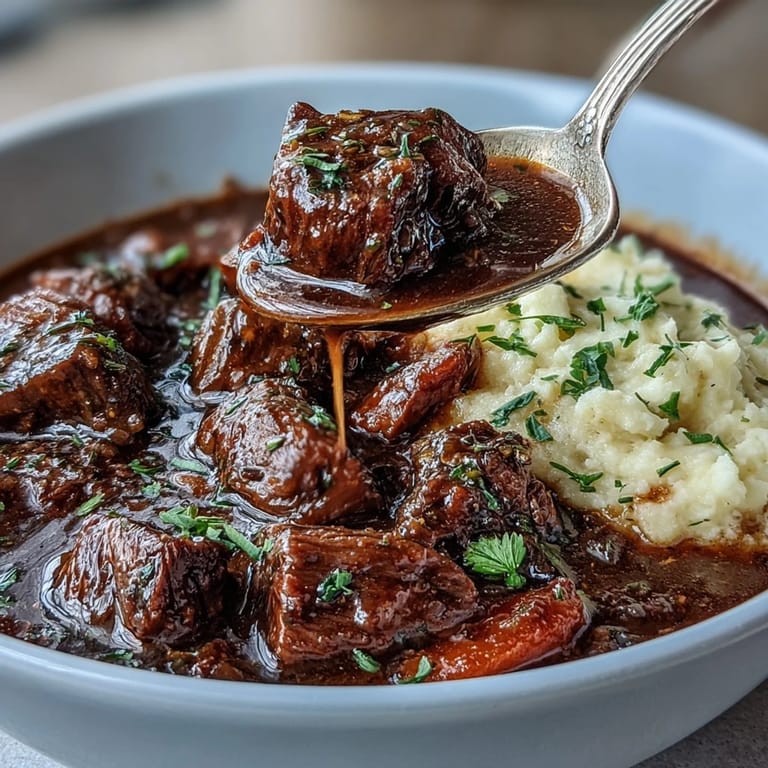
- Plate and serve:
- Spoon a generous mound of cauliflower mash into each bowl, then ladle the hot stew over the top. Garnish with fresh chives if you have them—it adds a nice sharp note and a pop of color.
 Save
Save There's something about serving a bowl of stew to someone and watching them relax into it, shoulders dropping, the world getting a little quieter. That's what this dish does—it gives you permission to slow down.
The Magic of Lean Beef
I used to think lean beef would be tough and flavorless, but long, slow cooking transforms it into something incredibly tender. The key is not rushing the braise and trusting that the liquid and gentle heat will do the work. Trimming the fat beforehand means fewer calories but exactly the same comfort level, which feels like getting to have your cake and eat it too.
Cauliflower Mash as the Secret Weapon
The first time I served cauliflower mash to someone without telling them what it was, they didn't guess. It's creamy, it's satisfying, and it absorbs the stew broth beautifully so you get that soaked-potato texture without the carb load. Blending it smooth is what makes the magic happen—chunky cauliflower won't have the same luxurious feel.
Make It Your Own
This is a template that welcomes improvisation. I've added a splash of Guinness instead of wine and watched people's eyes light up with recognition of that deep, roasted flavor. My neighbor swears by adding a parsnip alongside the carrots, and honestly, she's onto something.
- Try a dark stout beer instead of red wine for an extra layer of richness and Irish authenticity.
- If you have root vegetables like parsnips or turnips hanging around, they fit right into this stew without changing the cooking time.
- Fresh thyme and rosemary work beautifully here if you have them, using roughly triple the amount of dried herbs.
 Save
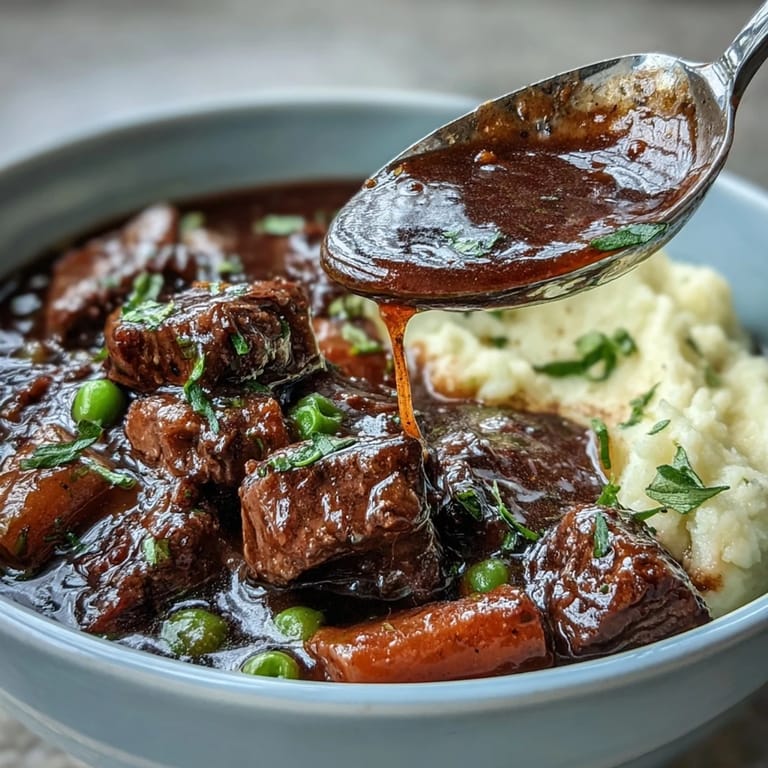
Save This stew proves that eating lighter doesn't mean eating less satisfyingly. It's comfort food that doesn't apologize and doesn't make you feel heavy afterward.
Recipe FAQs
- → What cut of beef is best for this dish?
Lean stew meat trimmed of excess fat works well as it becomes tender during slow simmering without becoming greasy.
- → Can I substitute the cauliflower mash with another side?
Yes, options like mashed sweet potatoes or roasted root vegetables complement the stew while keeping it light.
- → How can I add more depth to the stew’s flavor?
Adding a splash of stout like Guinness instead of red wine enhances the richness and adds subtle bitterness.
- → Is it possible to make this dish dairy-free?
Yes, replacing butter and milk in the mash with plant-based alternatives keeps it dairy-free without sacrificing creaminess.
- → How do I thicken the stew naturally?
Removing half a cup of cooked vegetables, mashing them, then stirring back into the stew naturally thickens the broth.