 Save
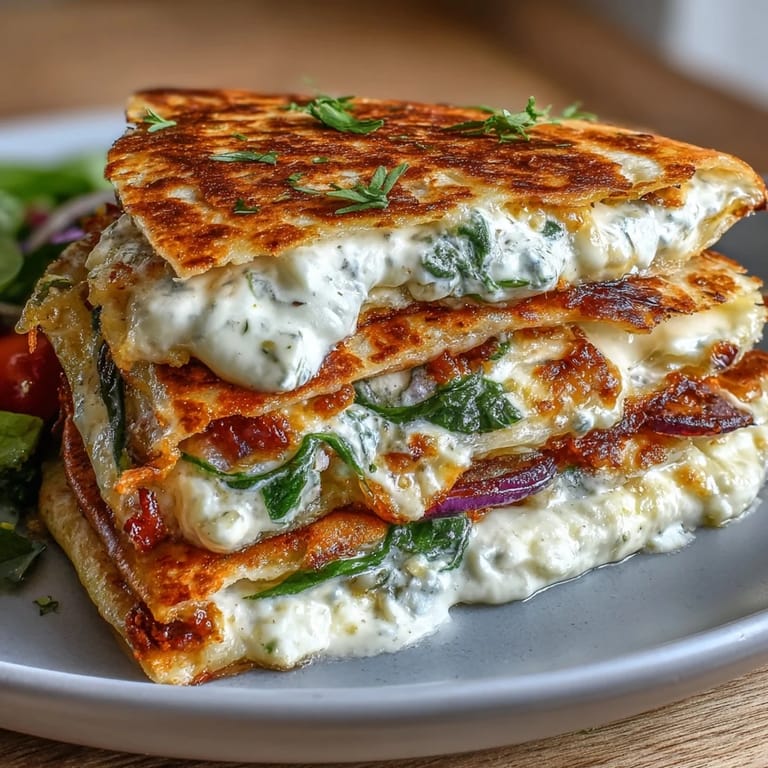
Save My neighbor stopped by on a Tuesday afternoon with a bag of farmers market spinach and wouldn't leave until we'd turned it into something worth eating. We had tortillas, some feta crumbles left over from the weekend, and about twenty minutes before the kids needed to be picked up from school. What came out of that skillet—golden, crispy, filled with melted cheese and tender greens—became the lunch I've made at least once a week ever since. It's the kind of dish that feels effortless once you know the trick, but tastes like you've been planning it all day.
I made these for my book club once, thinking they'd be a casual appetizer, and somehow they disappeared faster than the wine. One of my friends asked if I'd consider catering her daughter's graduation party. That night taught me something important: simple food made with attention and care hits different than fancy-sounding recipes that need five specialty ingredients.
Ingredients
- Fresh spinach: Use the tender, crinkly kind if you can find it, and don't be shy about the amount—it reduces dramatically when cooked, so those 6 cups shrink down to almost nothing.
- Red onion: Thin slicing matters here because those sweet, peppery rings need to be tender enough to melt into the filling without overpowering everything else.
- Garlic: Two cloves might sound modest, but blooming them in oil first creates this underlying warmth that makes the whole filling taste more intentional.
- Fresh basil or parsley: Dried herbs work in a pinch, but fresh herbs scattered through the filling and on top are what make people ask for your recipe.
- Feta cheese: The tanginess is non-negotiable—it's what separates this from a bland spinach-and-cheese situation and gives everything a Mediterranean edge.
- Mozzarella cheese: This is your melting agent, your cheese glue that holds everything together and creates those satisfying stretchy strands.
- Flour tortillas: Go for the soft, pliable kind rather than the thin and delicate variety, which can tear when folding.
- Olive oil: It genuinely matters here—use something you'd actually eat on a salad, because you're tasting it in every bite.
- Oregano: Just a whisper of it rounds out the Mediterranean flavor without making anyone wonder what that herbal note is.
Tired of Takeout? 🥡
Get 10 meals you can make faster than delivery arrives. Seriously.
One email. No spam. Unsubscribe anytime.
Instructions
- Wake up your garlic:
- Heat your olive oil over medium warmth until it shimmers slightly. Add the minced garlic and let it sit for about 30 seconds—you're listening for a subtle sizzle and waiting for that unmistakable aroma to fill your kitchen. This small moment transforms raw garlic into something mellow and aromatic.
- Wilt the spinach gently:
- Add your chopped spinach to the aromatic oil and stir constantly for 2 to 3 minutes until it's tender and dark green. The spinach will seem to shrink impossibly, but that's exactly what you want—transfer it to a colander and press with the back of a wooden spoon to squeeze out any excess moisture, which keeps your filling from becoming soggy.
- Build your flavor base:
- In a mixing bowl, combine your crumbled feta, shredded mozzarella, thin red onion slices, a generous pinch of oregano, and your fresh herbs. Fold in the cooked spinach and stir until everything is evenly distributed and the cheeses are loosely coating all the vegetables.
- Assemble with intention:
- Lay one tortilla flat on your work surface. Spoon about a quarter of the filling onto one half, leaving a small border so the cheese doesn't escape when you fold. Press the empty half down over the filling, creating a half-moon shape that feels sturdy but not overstuffed.
- Achieve the perfect golden crust:
- Wipe out your skillet and return it to medium heat with a light coating of olive oil or butter. Once it's warm, carefully place your filled quesadilla in the pan and let it cook undisturbed for 2 to 3 minutes until the bottom turns golden and crispy. Flip gently with a spatula and cook the other side for another 2 to 3 minutes, pressing down occasionally to encourage even browning and ensure the cheese melts completely.
- Rest and serve:
- Remove each quesadilla from the skillet and let it rest for about a minute on a clean plate—this gives the filling a moment to set so it doesn't spill out when you cut. Slice into triangular wedges and scatter fresh herbs on top if you're feeling celebratory.
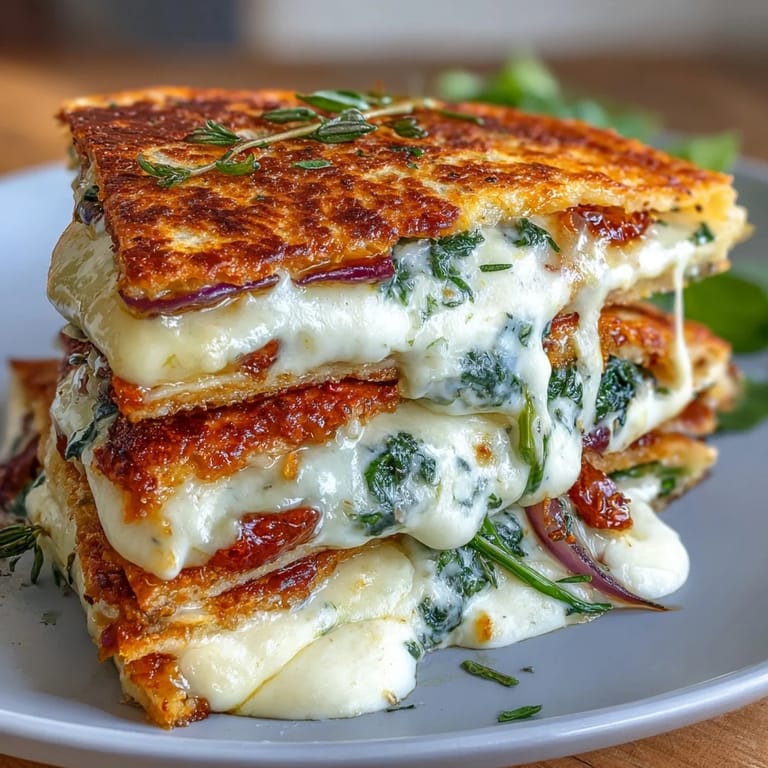 Save
Save There's something genuinely special about folding a warm tortilla and watching the cheese start to melt through the edges, knowing in about five minutes you're going to bite into something that tastes far more complicated than it actually is. That's the whole magic of this dish.
Why This Combination Works
Mediterranean flavors are built on contrast—the sharpness of feta against the mild creaminess of mozzarella, the sweetness of caramelized onion against fresh herbs, the earthiness of spinach against the brightness of lemon and oregano tones. When you layer those into a quesadilla format, each bite has depth instead of tasting one-dimensional. The warm cheese acts as a binder that pulls all those distinct flavors into something coherent and comforting, which is why this doesn't feel like you're just eating a veggie sandwich.
Timing and Temperature Matter
I've made these at too-high heat and ended up with a blackened tortilla and cold filling in the middle. I've made them at too-low heat and watched the cheese never really melt into that ideal glossy state. Medium heat is genuinely the sweet spot—it gives the outside enough time to develop color and crispness while the inside warms through and the cheese softens into something almost spreadable. The other timing piece that changed my results completely was understanding that the spinach needs to release its moisture before assembly; otherwise you're battling steam inside the quesadilla, which creates sogginess instead of crispness.
Serving and Pairing Ideas
These quesadillas live comfortably at the center of a meal or off to the side as part of a spread. I've served them alongside a simple Greek salad when I want something light, and I've made them the main event with tzatziki for dipping and a warm tomato-basil soup on the side when I want to feel more generous with the portions. They also work beautifully as leftovers—slice them cold for lunch the next day, or reheat in a skillet with just a touch more oil to restore some of that crispy exterior.
- Try adding sun-dried tomatoes, roasted red peppers, or Kalamata olives to the filling if you want to push the Mediterranean angle further.
- Swap the mozzarella for sharp provolone if you want a more assertive cheese moment, or use creamy goat cheese for something richer and slightly tangy.
- These freeze beautifully—assemble but don't cook them, wrap individually in parchment, and cook directly from frozen with just a minute or two added to each side.
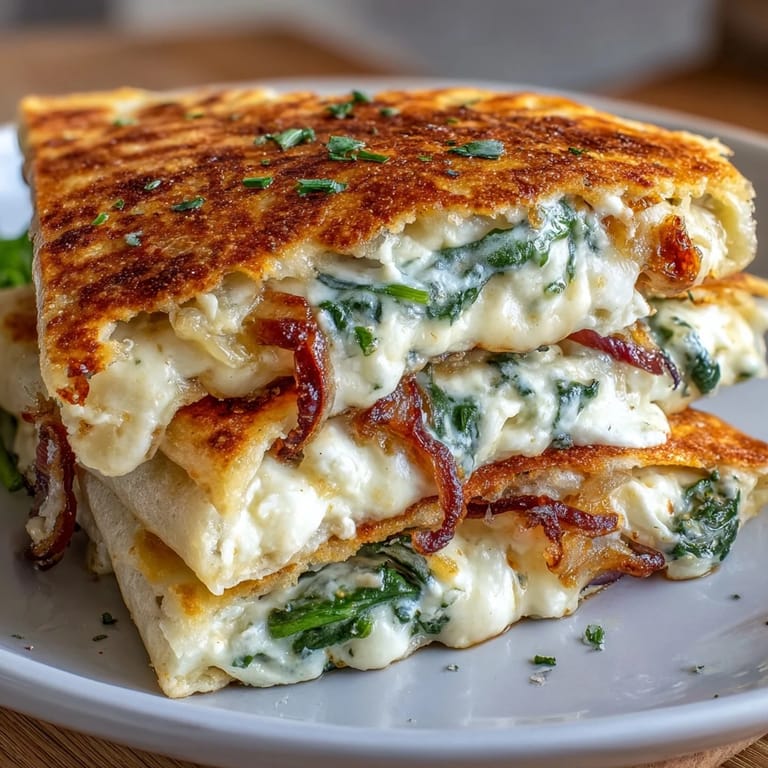 Save
Save This is the kind of recipe that becomes reliable once you understand the logic behind each step, and then it becomes something you make without consulting notes because you trust your hands and your instincts. That's when cooking stops feeling like following instructions and starts feeling like creating something for people you care about.
Recipe FAQs
- → How can I prevent the spinach from making the quesadillas soggy?
After cooking, press the spinach in a colander or with paper towels to remove excess moisture before mixing into the filling.
- → Can I substitute the cheeses for other types?
Yes, provolone or goat cheese can replace mozzarella or feta for different flavors and creaminess.
- → What cooking oil works best for crisping the quesadillas?
Olive oil or unsalted butter both create a golden crust; use according to your preference for flavor.
- → Are there ways to add more Mediterranean flavors to the filling?
Incorporate sun-dried tomatoes, roasted red peppers, or olives to enhance the Mediterranean profile.
- → How should leftovers be reheated to maintain crispness?
Reheat in a skillet or air fryer to retain the quesadilla's golden, crispy texture.
- → Can I make this dish gluten-free?
Use gluten-free tortillas as a substitute to accommodate gluten-free diets without sacrificing flavor.