 Save
Save My sister called me in a panic two days before her birthday—she'd mentioned offhand that she wanted something bright and lemony for her spring party, and I somehow volunteered to make it from scratch. Standing in my kitchen at midnight with bags of lemons piled on the counter, I realized I'd never made lemon curd before, let alone built an entire cake around it. What started as nervous energy turned into this beautiful, golden sheet cake that somehow became the star of her garden celebration. That afternoon, watching people's faces light up when they bit through the fluffy vanilla cake into that tangy, silky filling felt like the best kind of kitchen gamble.
I'll never forget my neighbor stopping by mid-assembly and catching me mid-panic about whether my lemon curd had split. She grabbed the whisk, we cooled it together over ice water, and suddenly there was this moment of collaborative kitchen chaos that turned the whole thing into an adventure rather than a test. When she tasted a slice the next day, she showed up at my door asking for the recipe—that's when I knew this cake had something special.
Ingredients
- All-purpose flour (2 ½ cups): The foundation of a tender crumb; make sure it's measured by weight if possible, as scooping can pack it too densely.
- Baking powder and baking soda (2 ½ tsp and ½ tsp): The baking soda brightens the lemon flavor while the baking powder gives lift; don't skimp on freshness.
- Unsalted butter (1 cup): Room temperature is non-negotiable here; cold butter won't cream properly and you'll lose that fluffy texture.
- Granulated sugar (2 cups): This creams with the butter to create tiny air pockets that make the cake tender and light.
- Eggs (4 large, room temperature): Cold eggs break the emulsion; let them sit out for 15 minutes before starting.
- Whole milk (1 cup, room temperature): The temperature matters—cold milk can seize the batter, so plan ahead.
- Lemon zest (1 zest from cake, 2 from curd): Use a microplane for fine zest that distributes evenly without bitter white pith.
- Egg yolks (4 for curd): Save those whites for meringues or custards; don't waste them.
- Fresh lemon juice (⅓ cup): Bottled juice is flat—fresh squeezed makes all the difference in brightness.
- Heavy cream (2 cups, chilled): Chill your bowl and beaters too; this helps you reach stiff peaks without overwhipping into butter.
- Powdered sugar (½ cup): Sifted before mixing prevents lumps that catch your whisk.
Tired of Takeout? 🥡
Get 10 meals you can make faster than delivery arrives. Seriously.
One email. No spam. Unsubscribe anytime.
Instructions
- Prepare your stage:
- Preheat your oven to 350°F and line a 9x13-inch pan with parchment paper—pressing it into the corners and letting the edges overhang makes it easier to lift the cooled cake. This single step prevents the edges from sticking and browning too dark.
- Build your dry mix:
- Whisk flour, baking powder, baking soda, and salt together in a bowl, breaking up any lumps with the back of your whisk. Doing this ahead means you're not scrambling when you're mid-cream.
- Cream butter and sugar until clouds form:
- Using an electric mixer, beat softened butter and sugar together for 3 to 4 minutes until it's pale, fluffy, and noticeably lighter in color. This aeration is what makes the cake tender, so don't rush it.
- Add eggs with intention:
- Crack eggs one at a time into the creamed mixture, beating well after each addition so they fully incorporate. If the mixture looks slightly curdled, that's normal—a tablespoon of flour will fix it.
- Fold in vanilla and lemon zest:
- Mix in the vanilla extract and lemon zest until just combined. The zest scatters tiny bursts of flavor throughout.
- Alternate dry and wet in three stages:
- Add one-third of the dry mix, then half the milk, then another third of the dry, then the rest of the milk, and finally the remaining dry ingredients. Mixing until just combined prevents overdeveloping the gluten—your cake will stay tender, not tough.
- Bake with patience:
- Pour batter into the pan and bake for 28 to 32 minutes until a toothpick inserted in the center comes out clean. Let it cool completely in the pan on a rack before moving forward.
- Make your lemon curd magic:
- In a small saucepan, whisk egg yolks, sugar, lemon juice, and zest together, then cook over medium-low heat, stirring constantly, for 5 to 7 minutes until it thickens enough to coat the back of a spoon. Remove from heat, whisk in cubed butter until smooth, then chill until cold.
- Whip cream to glossy peaks:
- In a cold bowl with chilled beaters, whip cold heavy cream, powdered sugar, and vanilla until stiff peaks form. Stop whipping the moment you see peaks—overwhipping turns it into butter.
- Slice and layer with care:
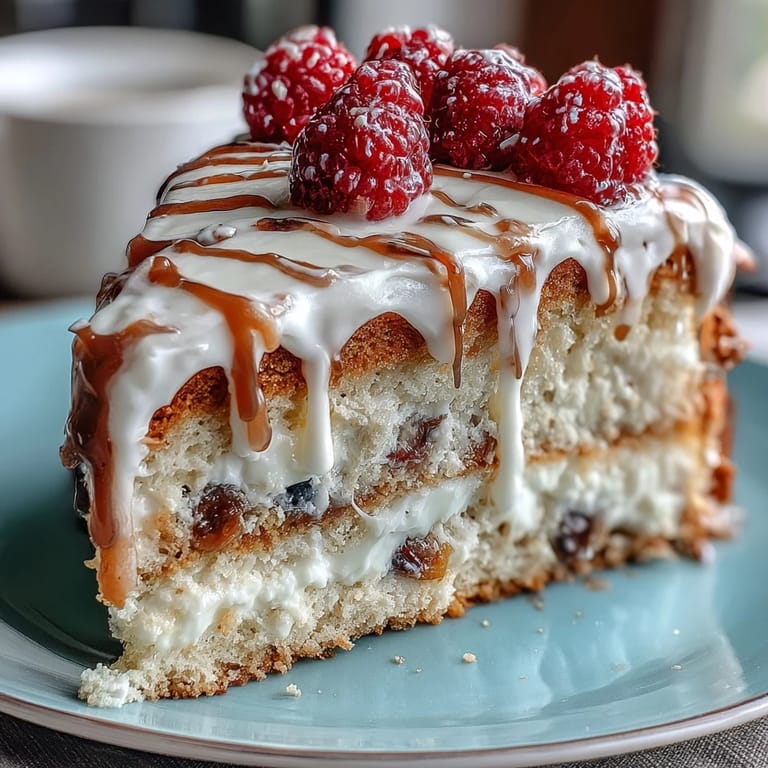
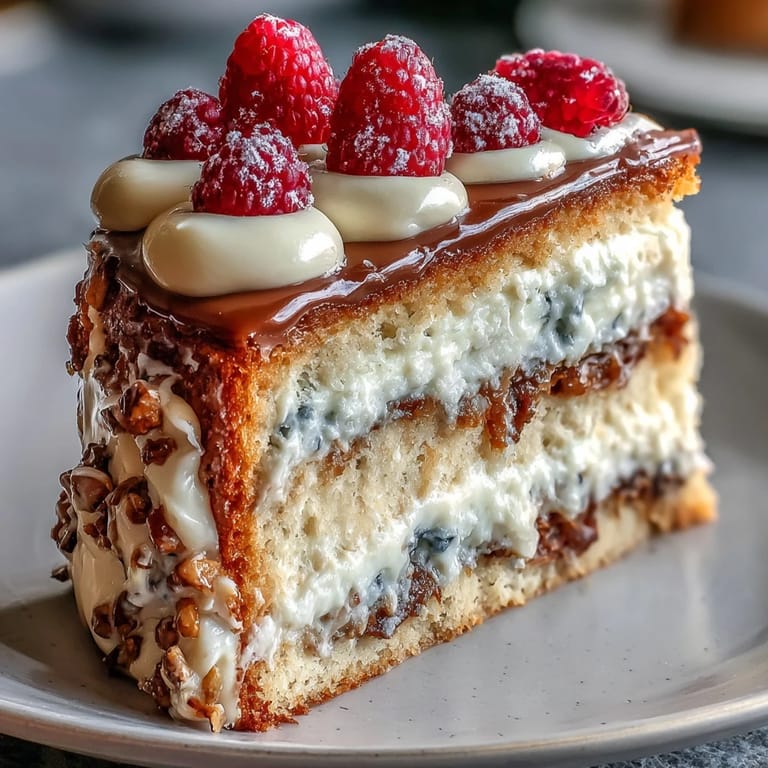
- Once the cake is completely cool, use a serrated knife and gentle sawing motions to slice it horizontally into two layers. Spread chilled lemon curd evenly over the bottom layer, then replace the top.
- Frost and decorate with joy:
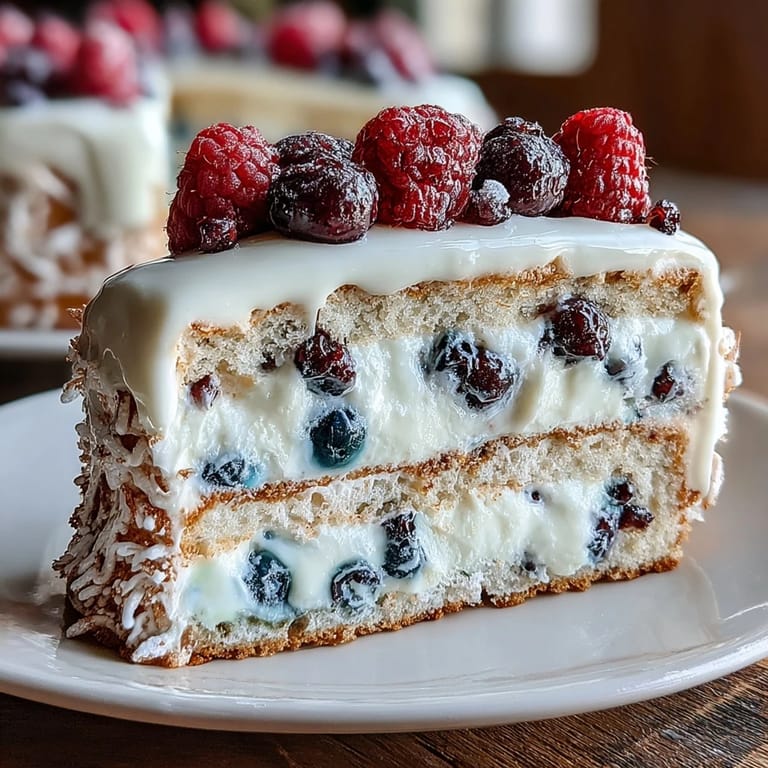
- Spread whipped cream frosting evenly over the top and sides, then crown it with fresh berries, edible flowers, or lemon zest curls. Chill for at least an hour before slicing for clean, beautiful pieces.
 Save
Save There's something deeply satisfying about a sheet cake—no pretense, just abundance shared straight from the pan. I watched my sister's garden fill with spring sunlight that afternoon, the cake surrounded by people who came for her but stayed for the food, and that's when I understood why this one stuck with me.
The Science of Tender Cake
Creaming butter and sugar isn't just a tradition—it's aerating the mixture with tiny bubbles that give the cake its tender crumb. When you add eggs to this aerated base, they emulsify the fat, which helps distribute moisture evenly throughout the batter. The milk then hydrates the flour just enough without making it tough, and the lemon zest adds acid that brightens flavor while tenderizing the gluten structure. I learned this the hard way after once overmixing a batter and ending up with something cake-adjacent but decidedly dense.
Why Fresh Lemon Curd Changes Everything
Homemade lemon curd has this velvety texture that store-bought versions struggle to match because you're cooking egg yolks with butter and lemon juice, which emulsifies into something silky. The flavor is also brighter and more complex—not just sour, but rich with that subtle bitterness from the zest. Once I realized how simple it actually was to make (and how dramatic the difference), I started making it for everything from toast to yogurt parfaits.
Assembly and Make-Ahead Magic
You can absolutely make the cake layers a day ahead and store them wrapped at room temperature; the lemon curd and whipped cream frosting are best assembled the morning of serving. If you're nervous about the horizontal slicing, chill the baked cake completely, wrap it in plastic wrap, and refrigerate overnight—a cold, firm cake slices more cleanly than a room-temperature one. One final tip: use a serrated knife and a gentle sawing motion rather than pressing down, which can compress the layers and squeeze out crumbs.
- A bench scraper or offset spatula makes frosting the top and sides infinitely easier and looks more polished.
- If your whipped cream starts to look grainy while frosting, refrigerate everything for 10 minutes and start fresh with a clean bowl.
- Fresh berries are beautiful, but lemon zest curls made with a microplane or vegetable peeler add that final touch of spring elegance.
 Save
Save This cake reminds me that the best recipes aren't the ones that look hardest—they're the ones that taste like you actually care. Make it for someone who deserves brightness in their day.
Recipe FAQs
- → How do I make the lemon curd filling?
Whisk egg yolks, sugar, lemon juice, and zest in a saucepan. Cook over medium-low heat while stirring until thickened, then stir in butter until smooth. Chill before use.
- → What is the best way to slice the cake cleanly?
Use a serrated knife and chill the assembled cake for at least one hour before slicing to achieve neat layers.
- → Can fresh berries be used for decoration?
Yes, fresh strawberries, raspberries, and blueberries add color and a fresh flavor, enhancing the visual appeal.
- → What is the purpose of chilling the cake after baking?
Chilling helps the cake set fully, making it easier to slice and assemble with the lemon curd and frosting layers.
- → Could I substitute store-bought lemon curd?
Yes, using store-bought lemon curd saves time and still provides the tangy flavor needed for the filling.
- → How can I intensify the lemon flavor in the cake layers?
Brush the cake layers with a lemon syrup before assembling to boost citrus notes throughout.