 Save
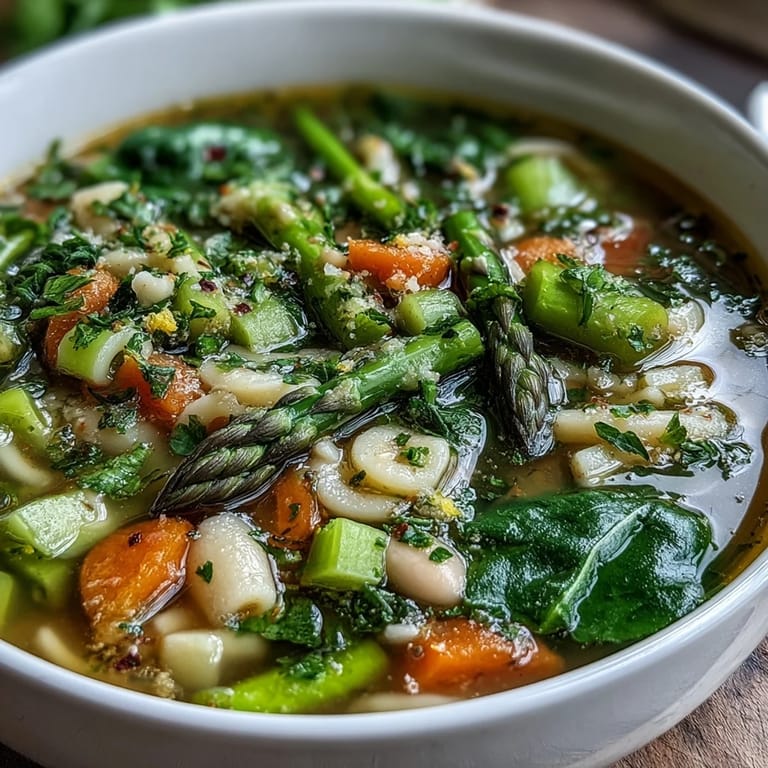
Save There's something about April that makes me crave soup, which seems backwards until you taste this one. My neighbor handed me a bundle of asparagus from her garden last spring, still dewy and impossibly fresh, and I realized I had no idea what to do with it except roast it. That evening, while chopping vegetables in my kitchen with the window open to the cool breeze, I thought about minestrone—that forgiving Italian soup that welcomes whatever you have on hand. By the time my partner walked in, the whole apartment smelled like thyme and spring, and suddenly this vibrant, light soup made perfect sense.
I made this soup for a friend who'd just moved to the city and was feeling homesick, and watching her face when she tasted it reminded me why cooking for people matters. She closed her eyes after the first spoonful and said it tasted like "trying" in a way that stuck with me. That's when I knew this recipe wasn't just good—it was the kind of thing you make when you want someone to feel cared for without making a fuss.
Ingredients
- Olive oil: Just one tablespoon here because the beans and vegetables release their own gentle richness as they soften.
- Onion, carrots, and celery: This is your aromatic foundation—sauté them together until the edges of the onion turn translucent and the kitchen smells alive.
- Garlic: Two cloves minced fine so they disperse into the broth rather than sitting in clumps; add it after the vegetables soften so it doesn't turn bitter.
- Zucchini: A small one, diced, adds body without overpowering the more delicate spring vegetables that come later.
- Asparagus: The star here—trim the woody ends by bending each stalk until it snaps naturally at the tender point, then cut into bite-sized pieces that cook through in minutes.
- Peas and spinach: Frozen peas are actually perfect because they keep their bright color and sweetness; fresh spinach wilts down to nothing, so don't be shy with the amount.
- White beans: Canned and rinsed work beautifully—they're tender and add protein without any of the planning that dried beans demand.
- Small pasta: Ditalini or small shells are your best bet because they cook in the same time the vegetables need, and they nestle into each spoonful instead of requiring a separate slurp.
- Vegetable broth: Low-sodium so you can taste everything else; warm it gently in another pot while your vegetables cook if you want the soup to come together faster.
- Herbs: Dried thyme and oregano anchor the flavor, the bay leaf adds a subtle whisper, and fresh parsley brightens everything at the end.
- Lemon zest: The secret ingredient that catches people off guard—it adds a barely-there brightness that makes each bite feel fresher than it has any right to be.
Tired of Takeout? 🥡
Get 10 meals you can make faster than delivery arrives. Seriously.
One email. No spam. Unsubscribe anytime.
Instructions
- Build your base:
- Heat olive oil in a large pot over medium heat and add the diced onion, carrots, and celery together. Let them soften for about 5 minutes, stirring occasionally—you're looking for the onion to turn translucent and the vegetables to smell sweet and caramelized at the edges.
- Wake up the garlic:
- Stir in your minced garlic and cook for just 1 minute until fragrant, careful not to let it brown. This brief moment transforms the pot's aroma entirely.
- Add the zucchini:
- Dice your zucchini and add it to the pot, cooking for another 2 minutes. The zucchini should still have a slight firmness—it will soften more as the soup simmers.
- Introduce the broth and seasonings:
- Pour in your vegetable broth and add the thyme, oregano, and bay leaf. Bring everything to a gentle boil, letting the herbs bloom into the liquid.
- Cook the beans and pasta:
- Stir in the drained white beans and your small pasta. Reduce the heat to a simmer and let it cook for 10 minutes, until the pasta is nearly tender and the beans have warmed through.
- Finish with spring vegetables:
- Add the trimmed asparagus and peas, cooking for another 5 to 7 minutes until the pasta is fully cooked, the asparagus is bright green and tender, and the peas have heated through. Taste a piece of asparagus—it should yield to your fork but still have a whisper of snap.
- Add the greens and final touches:
- Stir in your spinach (or chard if you prefer), the lemon zest, and fresh parsley. Cook for just 2 more minutes until the greens are completely wilted and everything is heated through. Season generously with salt and black pepper.
- Serve with care:
- Remove the bay leaf, ladle the soup into bowls, and drizzle with excellent olive oil and a handful of Parmesan if you'd like. The Parmesan will soften slightly into the warm soup, adding a subtle richness.
 Save
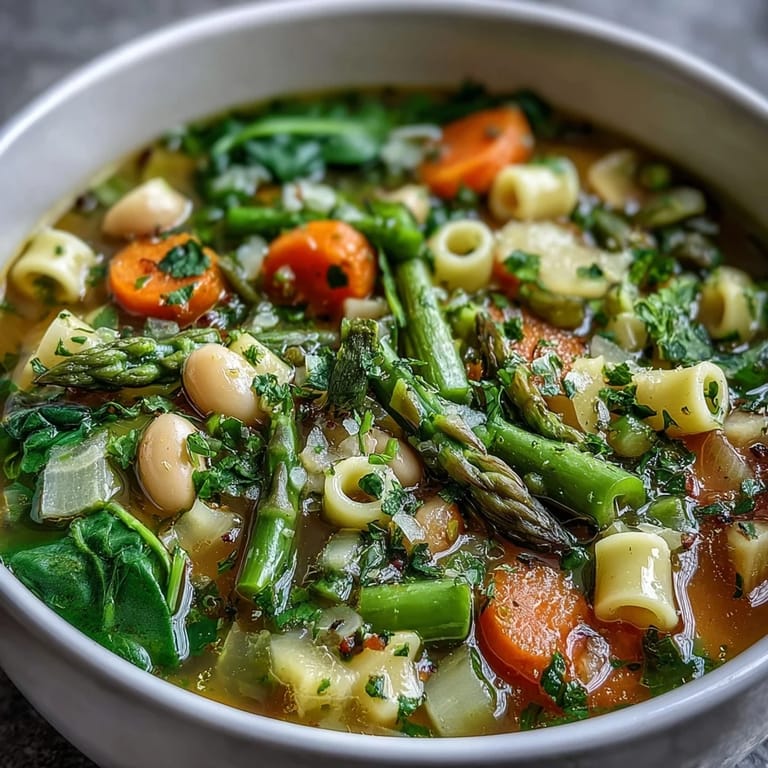
Save The first time someone asked me for this recipe, I realized I'd been making it from memory and instinct rather than writing anything down. I spent an afternoon reconstructing the measurements and techniques, tasting and adjusting until it matched what I remembered—that moment when soup becomes more than sustenance, when it becomes a conversation between you and whoever's about to eat it.
Making It Your Own
Minestrone is called "big soup" in Italian for a reason—it thrives on flexibility and actually tastes better when you swap things out based on what you have. Last week I used fava beans instead of cannellini and added some green beans I'd forgotten about, and honestly it was the best version yet. The formula matters more than the exact vegetables: a softer base, a protein source, small pasta, and at least one bright finishing touch that wakes everything up at the last moment.
Timing and Temperature
The beautiful thing about this soup is how forgiving it is with timing—I've accidentally left it simmering on low heat for an extra 10 minutes and it only got deeper and more cohesive. However, if you want to preserve the brightness of the spring vegetables and avoid that one-pot-meal-that's-been-sitting feeling, stick closer to the 30-minute cooking time and add those final vegetables when the pasta is almost done. Water will evaporate as it sits, so if you're making it ahead, save some broth or water to thin it back out when you reheat it.
Serving Suggestions and Storage
Serve this soup with crusty bread for a complete meal, or pair it with a simple salad if you want to feel like you're eating something lighter. Minestrone keeps beautifully in the refrigerator for up to 4 days, and it actually tastes better after a day or two when the flavors have had time to get to know each other. If you're making it ahead, store the pasta separately and add it fresh when reheating—this prevents it from absorbing too much broth and turning soft and bloated.
- Add a squeeze of fresh lemon juice at the table if you want extra brightness and a perk you can adjust to your taste.
- For a vegan version, simply skip the Parmesan or use a plant-based alternative that melts into the warmth of the soup.
- Frozen vegetables work perfectly here and often taste fresher than vegetables that have been sitting in your refrigerator for a week.
 Save
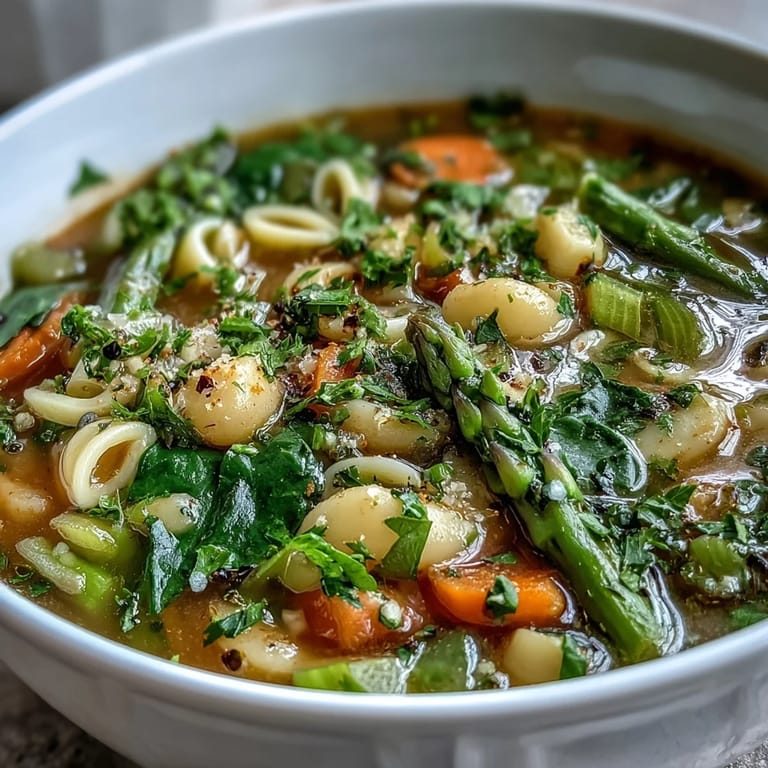
Save There's a reason soup shows up in kitchens during every season and every mood—it's because there's something about building something warm and nourishing that feels like an act of quiet love. This spring minestrone has become my go-to reminder that simple cooking, done with attention and fresh ingredients, is more than enough.
Recipe FAQs
- → Can I use different vegetables in this soup?
Yes, you can substitute with other spring vegetables such as fava beans or green beans to suit your taste or availability.
- → How do I make this dish vegan?
To keep it vegan, simply omit the Parmesan cheese or use a plant-based alternative for garnish.
- → Is this soup gluten-free?
It can be gluten-free if you use gluten-free small pasta or omit the pasta altogether.
- → What herbs enhance the flavor of this soup?
Dried thyme, oregano, and fresh parsley contribute aromatic notes that complement the vegetables and beans.
- → How can I add extra brightness to the soup?
A squeeze of fresh lemon juice or extra lemon zest added at the end brightens the flavors wonderfully.