 Save
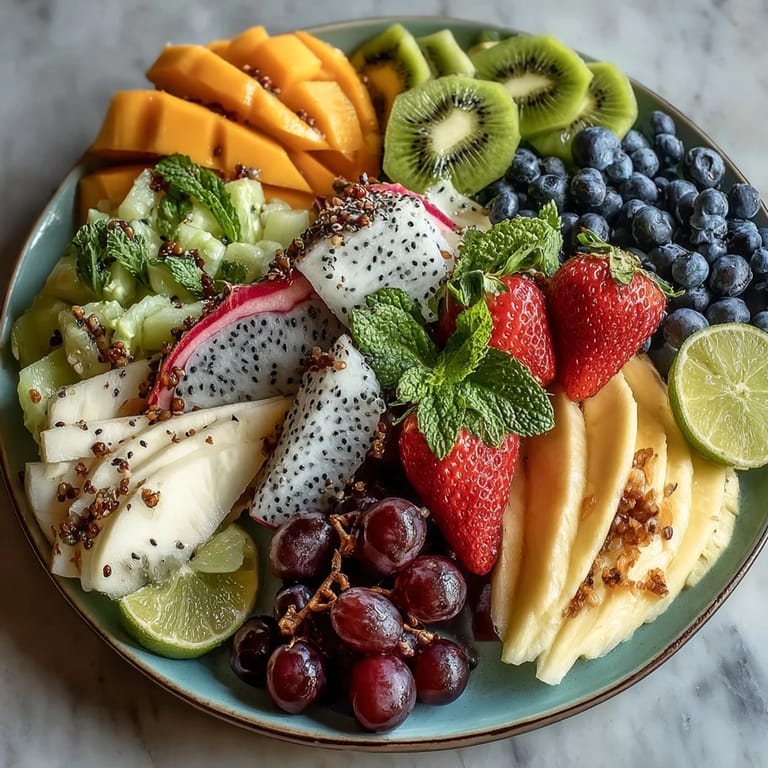
Save Last summer, I showed up to a friend's garden party with nothing but a cutting board and a bag of tropical fruits, determined to create something that would make people actually excited about eating fruit. Two hours later, surrounded by golden mango juice on my hands and the smell of fresh pineapple filling the kitchen, I'd arranged what looked like an edible sunset on a borrowed cake stand. The moment guests crowded around it, laughing and reaching for slices, I realized this wasn't just a fruit platter—it was an invitation to something bright and joyful.
I made this for my sister's baby shower on the hottest day of the year, and watching pregnant women dive into cool, refreshing mango slices while sitting in the shade became the whole party. Someone asked for the recipe, and I remember laughing because there really wasn't one—just fruit and the permission to make it beautiful. That's when I understood that sometimes the simplest things matter most.
Ingredients
- Ripe mangoes (2), peeled, pitted, and sliced: Choose ones that yield slightly to palm pressure and smell faintly sweet—underripe mangoes taste like disappointment, so don't rush this part.
- Large pineapple (1), peeled, cored, and cut into spears or chunks: Fresh pineapple should smell fragrant at the base and feel slightly soft, a sign the enzymes are at their peak.
- Kiwis (2), peeled and sliced: The bright green against other fruit colors creates pops of visual interest, and their tartness balances sweeter mangoes perfectly.
- Papaya (1), peeled, seeded, and sliced: If you can find a ripe one, it's buttery and mild—it's the connector fruit that harmonizes all the flavors together.
- Dragon fruit (1), peeled and sliced: Those tiny black seeds add textural intrigue, and the pale pink or hot magenta color makes people stop and stare.
- Seedless red grapes (1 cup): They roll slightly on the platter, filling gaps between larger fruit, and their firm sweetness gives contrast to softer fruits.
- Fresh strawberries (1 cup), hulled and halved: Pick berries that smell like summer—that fragrance means they're at peak flavor and will brighten the whole arrangement.
- Blueberries (1 cup): They nestle into crevices and add jewel-like touches of deep purple, plus their subtle tartness prevents the display from feeling too sweet.
- Fresh mint leaves (1/4 cup): Tear them gently just before serving so the oils release and fill the air with their cooling aroma.
- Lime (1), cut into wedges: These aren't just decoration—squeezing lime over fruit brightens everything and prevents browning on cut surfaces.
- Vanilla Greek yogurt (1 cup, or coconut yogurt for vegan): The dipping sauce should be creamy without being heavy, so don't skip the quality ingredient here.
- Honey or agave syrup (1 tablespoon): This gentle sweetener lets the fruit flavors lead instead of overpowering them with sugar.
- Lime zest (from 1 lime): Those tiny oils in the zest are where the brightness lives, making the dipping sauce feel intentional rather than basic.
Tired of Takeout? 🥡
Get 10 meals you can make faster than delivery arrives. Seriously.
One email. No spam. Unsubscribe anytime.
Instructions
- Start with your canvas:
- Wash and thoroughly dry your platter or cake stand—any water spots will show immediately on a clean display, and you want this to gleam. If using a tiered stand, you've got more real estate to play with, and your display becomes architectural rather than flat.
- Prep each fruit with intention:
- Slice mangoes by cutting lengthwise around the pit, then scoring the flesh in a crosshatch pattern and scooping the cubes out, or simply slicing them into elegant strips. Peel and core your pineapple, cutting into spears if you want drama or chunks if you're going for casual abundance.
- Build your foundation:
- Start with the biggest, most visually striking fruits at the center or base—mango and pineapple are your anchors here. Fan the slices in overlapping rows, like you're creating a color wheel, and let each piece catch the light slightly differently.
- Layer and fill thoughtfully:
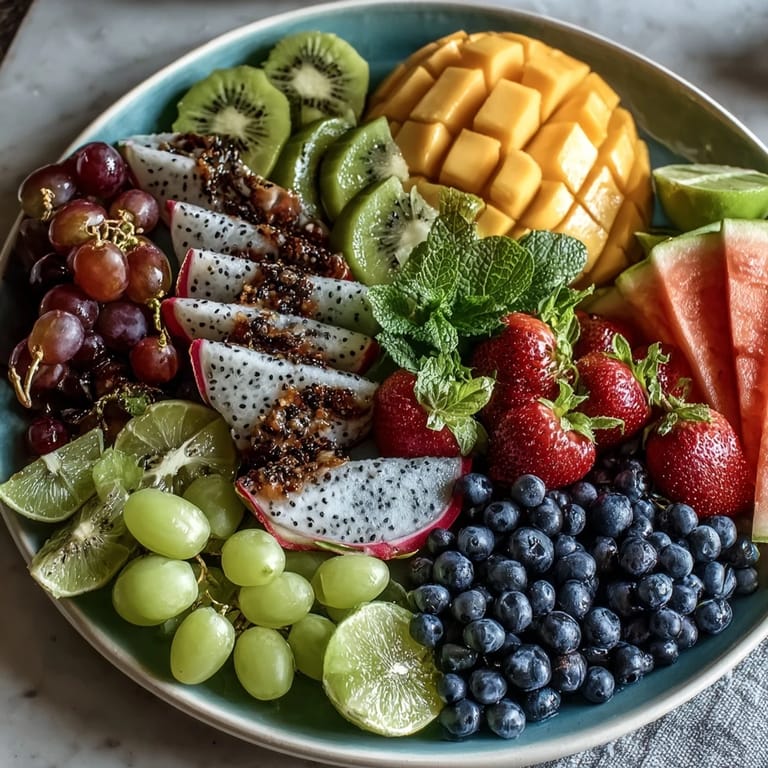
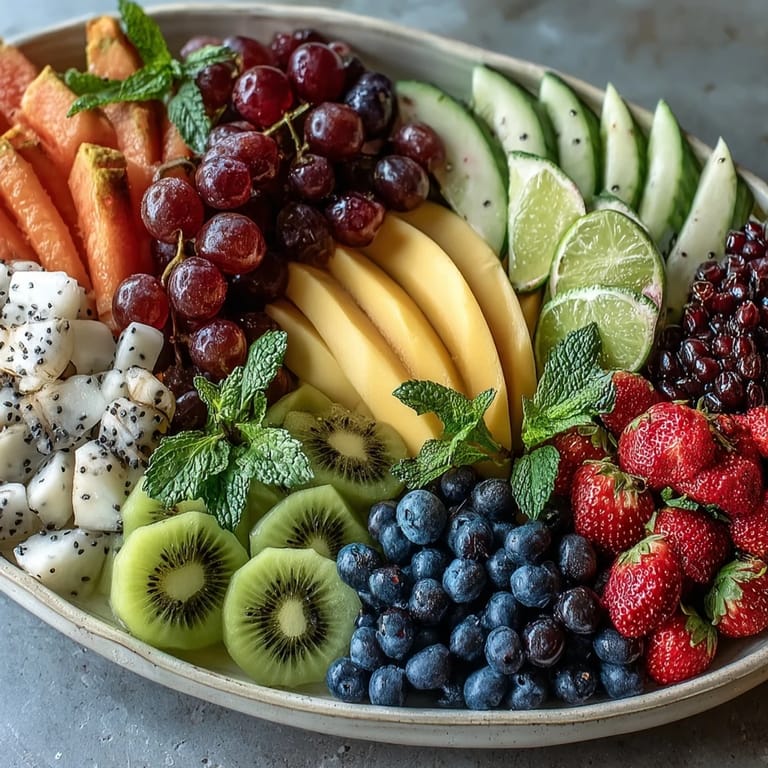
- Arrange papaya around the mango, then dragon fruit for those hot pink or magenta tones that make people gasp. Tuck kiwi slices to echo the bright green against deeper colors, then scatter grapes and berries into the remaining spaces like you're finishing a painting.
- Add the finishing touches:
- Scatter torn mint leaves across the entire display—they'll wilt slightly and release their cooling scent. Wedge lime pieces around the edges for both color and utility, a reminder that a squeeze of lime belongs on every bite.
- Prepare your dipping sauce (if using):
- Stir yogurt, honey, and lime zest together gently so the mixture stays creamy and light. Transfer to a small bowl and set it somewhere accessible, understanding that many guests will skip the sauce entirely because the fruit needs nothing.
- Keep everything cold until the moment:
- Cover the platter loosely with plastic wrap if you're prepping ahead, and keep it refrigerated—cold fruit is refreshing, while room-temperature fruit tastes flat and mealy. Your platter should feel like an invitation to something cool and restorative.
 Save
Save My uncle once said this fruit display was the first time he'd seen his kids genuinely excited about eating healthy, watching them reach for slices and comparing which fruit was the best. That comment stuck with me because it meant I'd done something beyond feeding people—I'd made them want what was good for them.
The Art of Arrangement
Creating a fruit display is less recipe and more creative choice, which is why it never feels the same way twice. Think about color blocking versus scattered arrangement, height variation versus a flat canvas, and whether you want the platter to feel controlled or abundant. The most important rule is that there are no rules—only your instinct for what looks inviting and makes someone want to reach in.
Timing and Temperature Matter
I've learned that the difference between a fruit display that sings and one that disappoints is often just temperature. Fruit that's been sitting at room temperature for an hour tastes soft and warm, while truly chilled fruit tastes crisp and alive. If you're hosting during warm months, keep your platter on a bed of ice underneath if you can hide it, or refresh it midway through the party by setting it back in the fridge for 10 minutes.
Making It Your Own
The beauty of this display is that it's infinitely adaptable to what's available and what you love. In winter, add pomegranate seeds and persimmons; in spring, add fresh figs and passion fruit; in fall, try star fruit and lychee. You're not bound by these specific fruits—you're using them as a framework for creating something that feels personal and seasonal to your table.
- Edible flowers like nasturtiums or pansies add unexpected elegance without adding flavor.
- A light sprinkle of toasted coconut flakes brings subtle texture and keeps the tropical theme alive.
- Don't forget that the lime wedges are functional—encourage guests to squeeze them over their selections for a brightness boost.
 Save
Save This isn't a recipe that changes your cooking skills or teaches you techniques; it's a reminder that beautiful, nourishing food sometimes asks for nothing more than care, good ingredients, and a moment of thoughtfulness. Serve it when you want people to feel welcomed and celebrated, because that's what a fruit display really does.
Recipe FAQs
- → How should the fruits be prepared for the display?
Peel, pit, and slice the mangoes and papaya, core and chunk the pineapple, and slice kiwis and dragon fruit. Arrange them artfully for a colorful presentation.
- → Can I substitute any fruits in this display?
Yes, seasonal or preferred fruits like passion fruit, star fruit, or melon can be swapped in to suit tastes or availability.
- → What garnishes enhance the tropical display?
Fresh mint leaves and lime wedges add aroma and color, while edible flowers or toasted coconut flakes can provide extra flair.
- → Is there an optional accompaniment for this fruit display?
An optional dipping sauce made from vanilla or coconut yogurt mixed with honey or agave syrup and lime zest complements the fruits beautifully.
- → How should this centerpiece be served and stored?
Keep the display chilled until serving to maintain freshness and vibrant colors throughout your event.